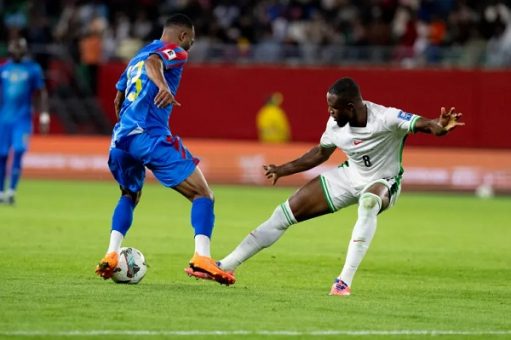
DR Congo Fires Back at Nigeria’s World Cup Protest

The dispute between the Democratic Republic of Congo and Nigeria has reached a boiling point, evolving from a sporting rivalry into a high-stakes legal battle that could determine the final shape of the 2026 World Cup.
The conflict centers on a formal petition submitted by the Nigeria Football Federation (NFF) to FIFA, alleging that the Leopards fielded as many as nine ineligible players during their decisive playoff victory.
Nigeria’s primary argument hinges on a perceived “fraudulent” clearance process, specifically regarding players who hold dual nationality.
The core of the legal tension lies in a direct conflict between DR Congo’s domestic laws and FIFA’s administrative requirements. Under the Congolese constitution, dual nationality is strictly prohibited; a citizen must formally renounce any foreign nationality to hold Congolese status. The NFF, led by General Secretary Mohammed Sanusi, contends that several prominent Congolese players—including foreign-born stars like Aaron Wan-Bissaka—still possess European passports from countries like France, the Netherlands, and the United Kingdom. While FIFA generally clears players as long as they hold a valid passport from the country they wish to represent, Nigeria argues that FIFA was “deceived” into these clearances because the players allegedly never completed the domestic legal requirement of renouncing their original citizenships.
DR Congo’s response to these allegations has been swift and defiant.
Through official social media channels, the Congolese football authorities have framed the petition as a desperate attempt by Nigeria to qualify through the “back door” after failing to win on the pitch. By stating that the World Cup is a matter of dignity and not “lawyer tricks,” the Leopards are attempting to hold the moral high ground, dismissing the NFF’s technical claims as the behavior of “bad losers.”
They have essentially challenged Nigeria to accept the 4–3 penalty shootout result, asserting that their documentation was fully vetted and cleared by FIFA’s own “Change of Association” platform prior to kickoff.
As it stands, the footballing world is waiting for a final ruling from FIFA’s Disciplinary Committee, which is expected before the intercontinental playoffs begin in March 2026. The potential outcomes are monumental: if FIFA finds evidence of misrepresentation or procedural fraud, DR Congo could face disqualification, which would potentially reinstate Nigeria into the World Cup qualifying path. However, legal experts suggest that since the players were officially cleared before the match, an outright reversal is rare unless proof of falsified documents emerges.
For now, the drama remains a battle of narratives, pitting the strict letter of the law against the raw results of the game.