South Africa to Host 2026 WAFCON After Morocco’s Sudden Withdrawal

South Africa has been officially confirmed as the host for the 2026 Women’s Africa Cup of Nations (WAFCON). This transition follows the sudden and unexpected withdrawal of Morocco, which had originally been scheduled to host the tournament for a third consecutive time. The announcement was made public on February 1, 2026, by South Africa’s Deputy Minister of Sport, Arts and Culture, Peace Mabe, during the Hollywoodbets Super League Awards.
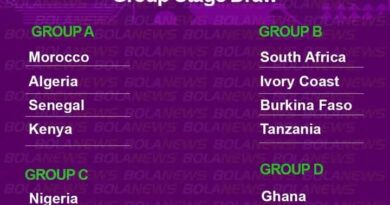
The decision for Morocco to step down comes as a major shock to the continental football community, particularly since the Moroccan football federation had already completed the final group stage draws in mid-January. The tournament was only 44 days away from its scheduled kickoff on March 17, 2026.
While official statements from the Confederation of African Football (CAF) are still clarifying the specific reasons for the withdrawal, reports indicate that the decision is deeply rooted in the fallout from the 2025 Men’s Africa Cup of Nations. That tournament, which Morocco also hosted, ended in a high-tension final that saw Senegal defeat the hosts, leading to formal complaints regarding crowd safety, officiating, and the treatment of visiting teams.
South Africa’s selection as the replacement host capitalizes on the country’s established reputation for organizing world-class sporting events. Minister Mabe emphasized that the nation’s existing infrastructure, which was modernized for the 2010 FIFA World Cup, makes it uniquely prepared to take over such a large-scale event on short notice.
She noted that South Africa had just successfully managed the logistics for the G-20 summit, proving its readiness in terms of hospitality and security. Preparation for the tournament is set to begin immediately, with the government and football associations working to secure stadiums and finalize travel arrangements for the 16 participating nations.
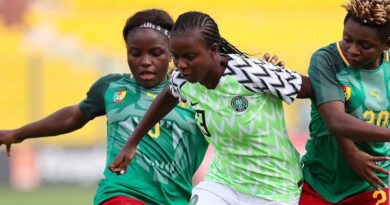
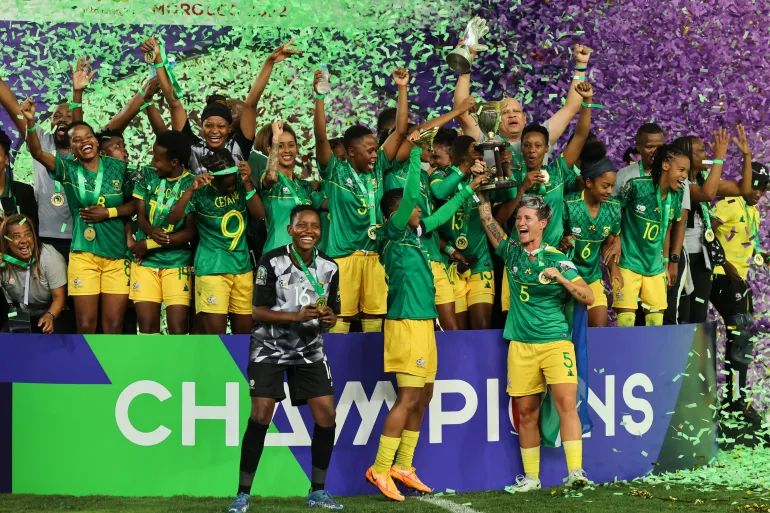
The stakes for the 2026 edition remain incredibly high, as the tournament serves as the primary qualifying path for the 2027 FIFA Women’s World Cup in Brazil. The expansion of the competition to 16 teams means that fans will see historic debuts from nations such as Malawi and Cape Verde. For the South African national team, Banyana Banyana, the change in venue provides a massive boost as they look to reclaim the title they won in 2022. Playing on home soil offers them a distinct advantage as they face off against perennial powerhouses like Nigeria and rising contenders like Zambia and Ghana.
As the continental football body shifts its focus southward, CAF is expected to release a revised match schedule in the coming days. This update will likely include the specific South African cities—expected to be Johannesburg, Cape Town, and Durban—and the specific stadiums that will host the four groups. While the logistical challenge of moving a 16-team tournament in under two months is daunting, the move to South Africa ensures that the growth of African women’s football continues without a delay to the 2026 calendar.