Messi’s Argentina to Face The Other Seleção

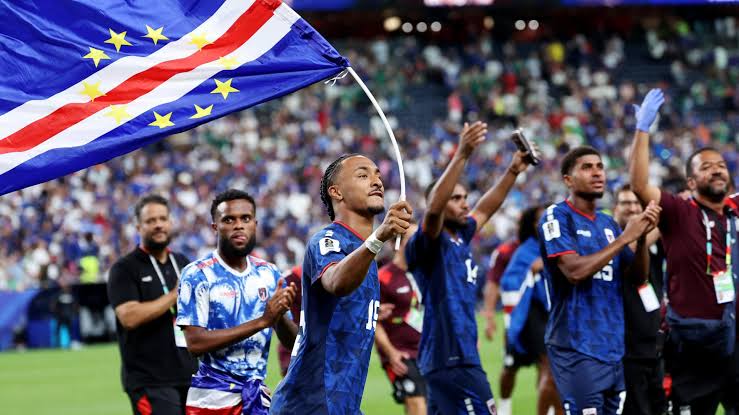
When football fans hear the word Seleção, thoughts naturally drift to Brazil. Nonetheless, as Cabo Verde prepare to face Argentina in the World Cup Round of 32, another Portuguese-speaking nation is staking its claim to the name. Backed by a footballing identity shaped through centuries of shared history with Portugal, Pedro Leitão Brito ‘Bubista’s’ men arrive believing their extraordinary journey is not over.
Argentina’s march through group J was a stuff of champions. Fluid, ruthless and, at times, breathtaking, they have looked every bit a side capable of defending their crown. But the world champions now face a very different kind of opponent. Cabo Verde do not seek to overwhelm with glamour or artistry. They thrive on resilience and collective belief. They do not promise beauty; they promise a battle. And their history carries a footballing significance that extends well beyond the ninety minutes.
To understand the magnitude of Cabo Verde’s presence at this stage of the World Cup, one must appreciate how remarkable their journey has been. Not long ago, the team was composed of some semi-professional players and existed on the periphery of African football. Their first-ever appearance at the Africa Cup of Nations came in 2013.
At the time, merely qualifying for a major tournament was considered a national triumph. Fast forward little more than a decade, and Cabo Verde now stand among the world’s remaining contenders, preparing to challenge the reigning world champions for a place in the Round of 16 this Friday night in Miami.
Their rise has been built on years of strategic development, intelligent recruitment, and perhaps most importantly, a flourishing diaspora network that stretches across Europe but remains deeply rooted in Portugal.
The nickname Seleção is no mere stylistic flourish. It reflects Cabo Verde’s historical relationship with Portugal, which ruled the archipelago for nearly five centuries before the country gained independence in 1975. Portuguese remains Cabo Verde’s official language, while Portuguese the language continues to shape many aspects of national identity, from literature and music to politics and football.
That connection is visible throughout the national team. Many Cabo Verdean internationals were born, raised or developed in Portugal. Others emerged from Portuguese academies or spent formative years competing within Portugal’s football pyramid. The technical education and competitive mentality that characterise modern Cabo Verdean football owe much to this enduring Lusophone connection.
In many ways, Cabo Verde represent one of the greatest success stories of football globalisation: a small island nation that has leveraged its historical ties and worldwide diaspora to create a competitive international side capable of challenging the greats.
The relationship between Cabo Verde and Portuguese football climbs beyond language and indeed, historical association.
Thousands of Cabo Verdeans, approximately 65,000 according to Prismaat – have settled in Portugal over generations, creating vibrant communities in Lisbon, Setúbal and other urban centres. These communities have become fertile ground for football talent, producing players who often grow up immersed in both Portuguese football culture and Cabo Verdean heritage.
In essence, Cabo Verde’s rise is not merely a sporting story. It is a story of migration, but that of an enduring power of cultural connection.
The term Seleção itself carries enormous symbolic weight. It is synonymous with some of football’s most iconic national teams. Portugal’s Seleção das Quinas and Brazil’s Seleção Brasileira have helped elevate the word into football’s global lexicon. Across the Portuguese-speaking world—from Angola, Mozambique and Cabo Verde—the term represents a shared footballing heritage.
There is more intrigue to Cabo Verde’s identity as the “other Seleção”. Argentina’s greatest footballing rivalry has long been with Brazil’s Seleção Brasileira—a rivalry that has lived through generations of football history. While Cabo Verde would never claim Brazil’s footballing stature, the island nation can perhaps be viewed as a miniature, resource-constrained cousin of the South American giants: another Portuguese-speaking Seleção, drawing from the same linguistic and cultural heritage and now presented with the opportunity to challenge Argentina on the world’s biggest stage. Adopting the title for Cabo Verde is not an act of imitation but one of belonging.
This shared identity also explains why matches involving Portuguese-speaking nations often carry an additional emotional dimension. Cultural affinities and historical connections intertwine in ways that rankings and statistics rarely capture.
Against Argentina, therefore, Cabo Verde carry with them the pride of a football culture shaped by centuries of interaction with one of the sport’s great traditions.
The irony, of course, is that while Argentina enter this contest as overwhelming favourites, Cabo Verde may feel no psychological inferiority whatsoever. Their sporting identity has been forged within one of Europe’s elite football cultures.There is another fascinating subplot at play here—one rooted in football’s eternal debates about greatness.
In the past, football arguments have been defined by rivalries. Debates of who was better: Maradona or Pelé, and Eusébio’s enduring legacy has been compared against successive generations of South American superstars. More recently, however, the sport became consumed by the defining rivalry of the modern era: Cristiano Ronaldo versus Lionel Messi.
Given Cabo Verde’s cultural and footballing ties to Portugal, it is impossible to ignore the emotional undertones that accompany a meeting with Messi’s Argentina. While the players themselves will focus solely on the on-feild challenge before them, supporters understand that football history often creates narratives that transcend the pitch.
For many observers across the Lusophone football world, defeating Argentina would represent more than a historic upset. It would amount to a symbolic triumph against the nation of Cristiano Ronaldo’s greatest rival—a proxy victory, in fact.
That narrative may exist only in the imagination of supporters and commentators, but football has always thrived on such emotional undercurrents.
And if there is one thing Cabo Verde have demonstrated throughout this tournament, it is that they have little interest in conforming to expectations.
Romance and symbolism aside, Cabo Verde have reached this stage because they possess genuine footballing quality.
Their World Cup campaign has been built on solidity. Rather than attempting to dominate possession, they have embraced a pragmatic approach centred on organisation.
Against Argentina, those qualities will be tested to their limits. Lionel Messi remains the central challenge. Even at this stage of his career, his ability to manipulate space and control the rhythm of a match remains unparalleled. Cabo Verde know they cannot stop him entirely. Their objective will instead be to restrict the spaces around him, deny easy passing combinations and force Argentina into wider areas.
The Blue Sharks have already demonstrated their ability to frustrate top opposition: knocking out Uruguay and separating on parity against Spain. Their willingness to suffer without the ball and capacity to strike quickly on the counterattack have become defining characteristics of their campaign.
Knockout football, after all, rarely rewards aesthetics. It rewards resilience. And few teams remaining in this tournament have displayed greater resilience than Cabo Verde.
Sentiment alone does not win World Cup knockout matches. Neither does history. However, Cabo Verde march into this encounter possessing something perhaps even more dangerous: belief.
Their journey to the Round of 32 already shattered expectations. But, for Cabo Verde’s Seleção, this is an opportunity to redefine what is possible for a nation whose footballing journey began on the margins and now unfolds on the grandest stage imaginable. The other Seleção has not travelled this far merely to participate—but to make history.