Elite, Sustainable, Professional: FIFA’s New Vision for African Women’s Football

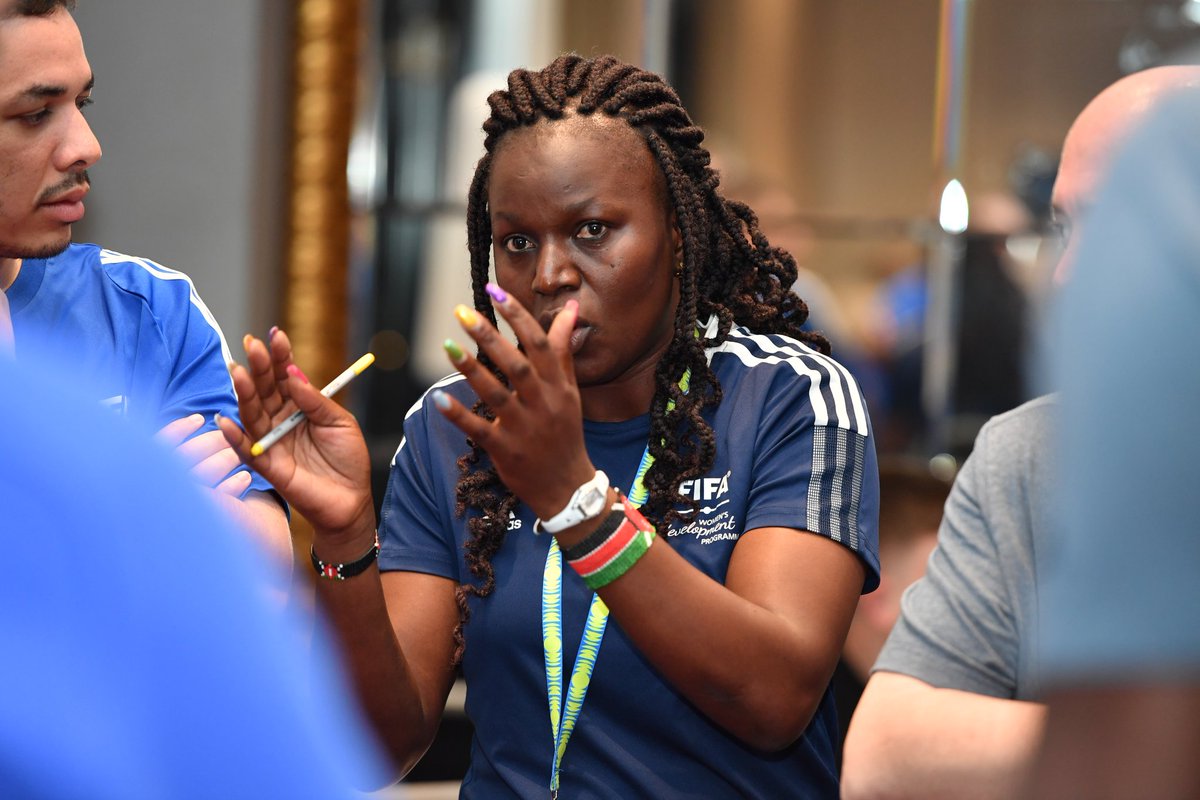
FIFA’s Women’s Football Lead for Africa, Doreen Nabwire, unveiled a plan designed to transform the women’s game on the continent from foundational growth into a global professional powerhouse.
The EX kenyan international who now works for FIFA full-time after her stint as a freelancer was addressing a group of FIFA-selected media professionals on Thursday, January 8. She outlined an evolution of the FIFA Women’s Development Programme, signaling a shift from foundational growth to elite, sustainable professionalization across the continent.
The briefing served as both a reflection on the successes of the 2020-2025 cycle and a strategic launchpad for the 2025-2027 Roadmap, which aims to cement Africa’s position as a global powerhouse in women’s football.
Building on Success: The 2020-2025 Legacy
Nabwire opened the session by highlighting the remarkable engagement seen over the last five years, noting that the African continent showed appetite for structural growth despite global challenges. This period of development was marked by widespread adoption, with 32 out of 54 Member Associations actively participating in various initiatives. These efforts resulted in a total of 89 specific programme engagements that focused heavily on core areas such as women’s football strategy, grassroots campaigns, and league development.
Nabwire emphasized that FIFA is not starting from scratch but is instead building on a foundation where nearly 60% of African nations have already begun formalizing their women’s football structures. While the results are increasingly visible on the pitch, she noted that the next phase is dedicated to what happens in the boardrooms, technical centers, and commercial markets.
The 2025-2027 Strategy: 13 Pillars of Transformation
The 2025-2027 programme includes a comprehensive 13-point plan designed to professionalize every facet of the game. Nabwire detailed how these pillars move beyond mere participation and towards mind-blowing performance and commercial viability.
For the first time, FIFA is introducing a Commercial Strategy Pilot and Global Benchmarking of Women’s Leagues. These initiatives are designed to help African leagues understand their market value and attract sustainable investment. This commercial push is further supported by refined club licensing frameworks, which ensure that teams operate with professional administrative standards that meet international expectations.
Technical Excellence and Mentorship
A significant portion of the roadmap is dedicated to the technical side of the game, specifically focusing on the coaches and leaders who shape the players. This includes a robust offering of coach education scholarships available for both individuals and groups, as well as specialized mentorship tracks for general coaching and elite performance coaching. Furthermore, the roadmap provides direct support for women’s national team preparation to ensure African nations arrive at international tournaments fully equipped to compete at the highest level.
Leadership and Capacity Building
To ensure long-term sustainability, FIFA is doubling down on the human element behind the scenes. This is being achieved through intensive capacity-building for administrators and the Women in Football Leadership programme, which aims to empower more women to take on decision-making roles within the sport’s governing bodies.
Unlocking Support through Forward 3.0
Nabwire explained that these 13 programmes serve as keys that unlock specific, tangible resources for Member Associations. Depending on their chosen focus, nations can access a variety of support types, including technical assistance through expertise and networking, financial and material aid such as direct funding and equipment, and the development of human capital through leadership training.
This entire support structure is underpinned by the FIFA Forward 3.0 programme. This framework rests on three non-negotiable pillars: increased investment, which allocates more funding than ever before to football development; strict oversight to ensure every dollar is used responsibly and transparently; and a commitment to measurable impact, focusing on clear development objectives that fundamentally change lives across the continent.
A Call to Action
Closing the session, Nabwire issued a clear message to the media, stating that the tools for success are now on the table. She reiterated that the goal is to make African women’s football globally competitive and commercially independent. By integrating strategy, capacity building, and elite performance, FIFA aims to ensure that the talent found on African soil is supported by a world-class structure.
The 2025-2027 cycle represents a definitive turning point for the continent, marking the transition from an era of development to a new era of excellence.