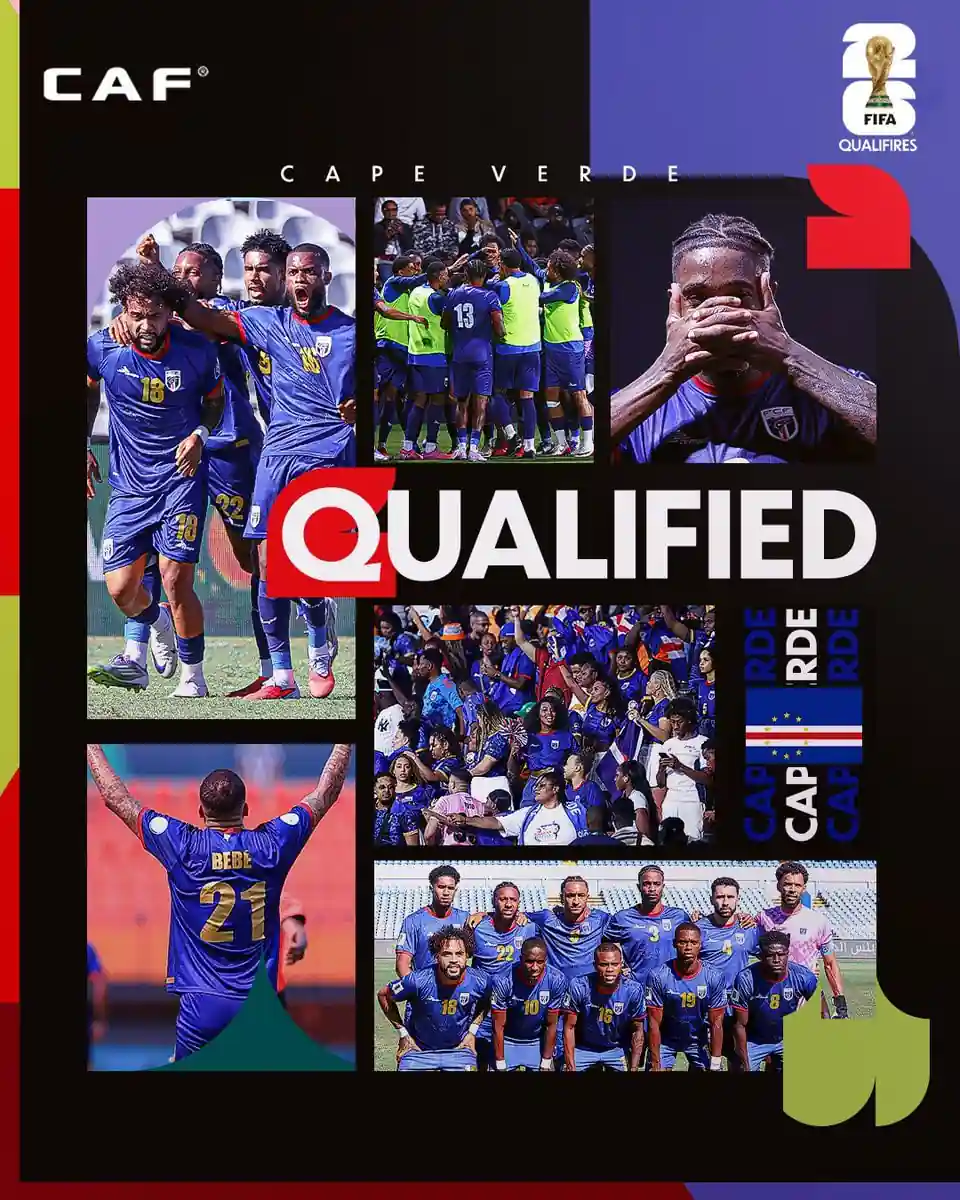
How the 2023-2026 Cycle by FIFA and FCF Propelled Cabo Verde to the World Cup

The successful qualification of Cabo Verde for its first-ever FIFA World Cup stood as the crowning achievement of a transformative cycle between 2023 and 2026. This period, defined by the Cape Verdean Football Federation’s (FCF) ambitious strategic roadmap and bolstered by the FIFA Forward program, reshaped the nation’s sporting landscape.
By the time the final whistle blew on the 2026 FIFA World Cup qualifiers that had Cameroon and Angola in a difficult group D, the Blue Sharks made history.
The Foundation of Success: FIFA Forward Integration
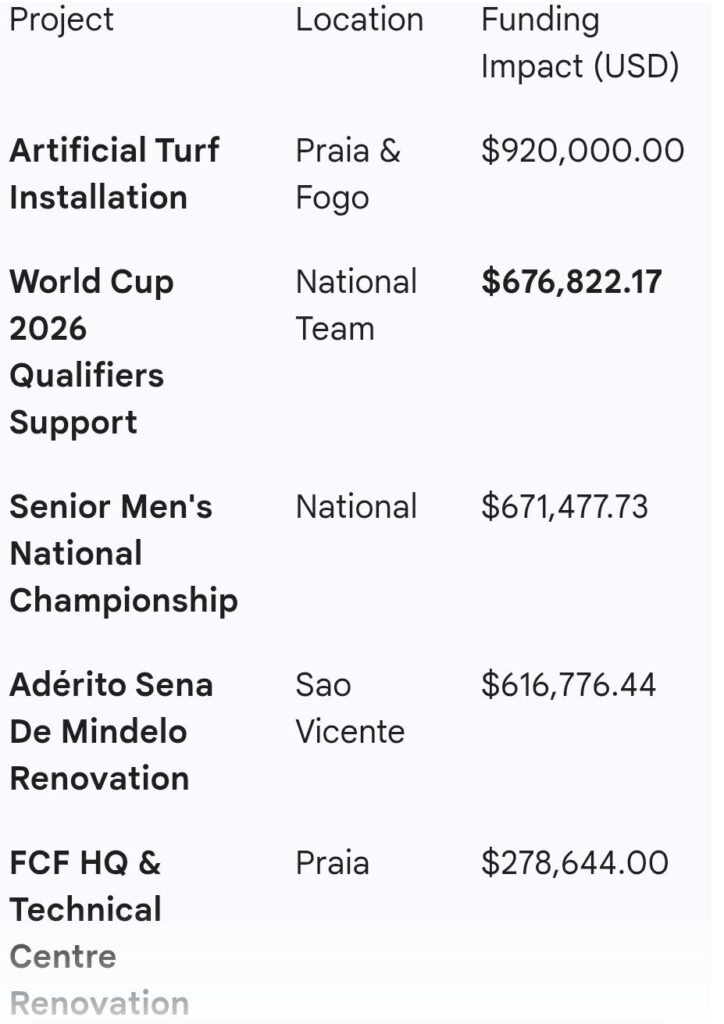
The journey to the World Cup was paved with targeted investments. Through the FIFA Forward partnership, the FCF directed financial injections into the core pillars of the national game, ensuring the team had the infrastructure and support necessary to compete at the highest level.
Financial Allocation and Infrastructure
Beyond physical assets, the FCF utilized high-performance technology under FIFA’s Talent Development Scheme (TDS). This digital transformation allowed the technical staff to monitor player performance with precision, while modernized administrative structures ensured that the logistics of a global qualifying campaign were handled with professional excellence.
Diversification and the Talent Pipeline
The 2023-2026 cycle was not solely about the senior men’s team, as it also created a sustainable footballing culture:
- The FCF launched nationwide Youth Football Festivals for U15 and U17 categories, which acted as a massive talent identification net. This ensured that the gap between grassroots passion and professional pathways was bridged across the entire ecosystem.
- The federation also formalized the small-sided game, recognizing the unique geography of the islands.
- The Cabo Verde Futsal and Beach Soccer Leagues were established to provide year-round competitive opportunities.
- Technical Training was overhauled, producing a new wave of high-level coaches and referees.
- Gender Parity became a reality through the professionalization of the women’s game, which increased the overall depth of the nation’s footballing IQ.
Connectivity: Uniting the Diaspora and the Islands
A pivotal factor in the 2026 success was the mobilization of the Cabo Verdean identity. To bridge the geographic divide of the islands and engage the vast diaspora, the FCF launched a dedicated online television and radio channel. By broadcasting league matches globally, the federation increased the visibility of local talent and fostered a unified Blue Sharks brand that resonated from Praia to Lisbon and Boston. This growth was managed with an eye on the future. The Environmental Efficiency and Sustainable Competitions program optimized travel logistics between the islands, reducing the carbon footprint of the national leagues and ensuring that the federation’s expansion remained fiscally and ecologically responsible.
A Legacy of Unity
The 2023-2026 cycle addressed long-standing regional inequalities. By providing vehicles and financial support to regional associations, the FCF ensured that talent from the most remote islands had a path to the national stage. The establishment of the Unity Tournament further solidified football as a tool for social integration, bringing together players regardless of social status, disability, or origin.
When Cabo Verde finally secured its place on the world stage, it was the validation of a three-year masterclass in sports development and national vision, still ongoing.