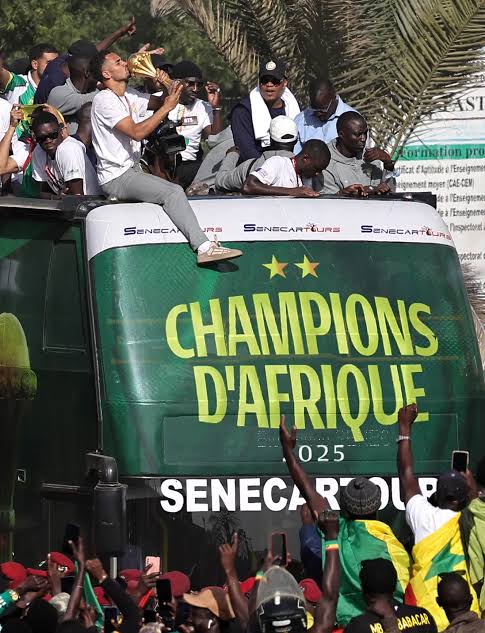
The Darkest Hour of African Football: Corruption, Chaos, and the Death of Sporting Merit

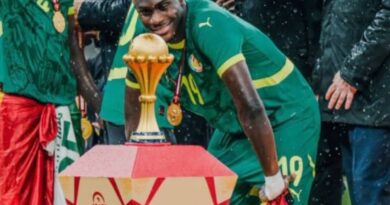
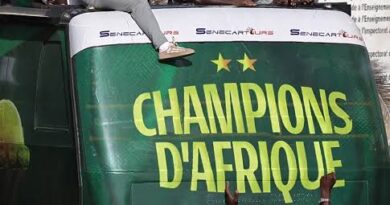
The recent decision by the Confederation of African Football (CAF) to retrospectively strip Senegal of their 2025 Africa Cup of Nations (AFCON) has garnered a seismic impact through the continent, potentially sparking a diplomatic and sporting crisis. The Senegalese presidency’s public condemnation of CAF this March 18, 2026, is a reaction to a calculated strike against a governing body they allege is riddled with systemic corruption, procedural rot, and a blatant disregard for the truth of the pitch.
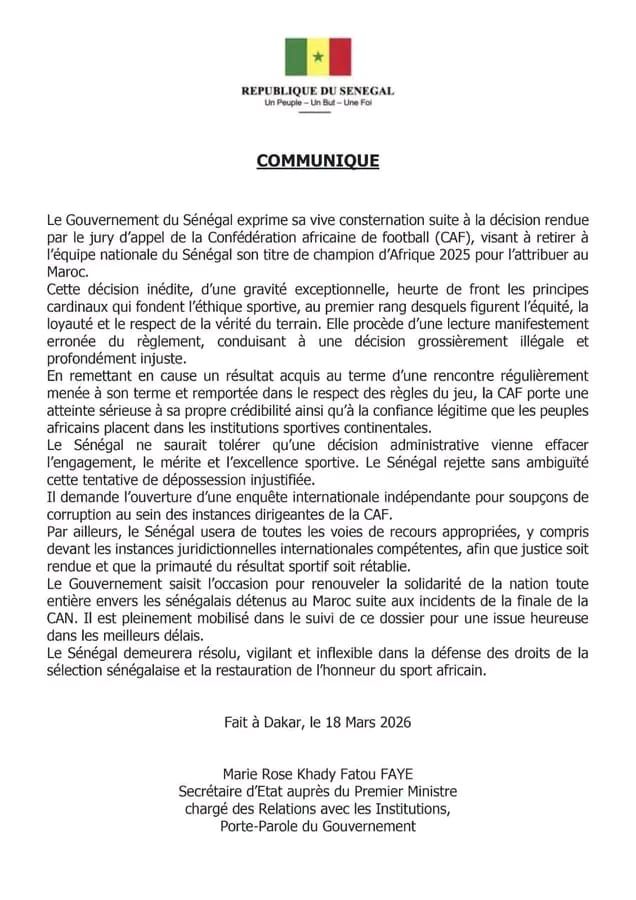
The Senegalese government’s decision to call for an “independent international investigation” is a vote of no confidence, and a calculated strike against a regime that many believe has traded the truth of the pitch for backroom deals and geopolitical favors. For Senegal, the 3-0 forfeit handed to Morocco—overturning their hard-fought 1-0 victory—is an order carried out to appease powerful interests.
Governance in Decay: The Ghost of the General Secretariat
The administrative rot at CAF is most visible in the continued, and arguably illegal, tenure of General Secretary Véron Mosengo-Omba. Under CAF’s own Employment Handbook (Regulation 130), the compulsory retirement age is set at 63. Mosengo-Omba, a Swiss-Congolese lawyer and close ally of FIFA President Gianni Infantino, turned 66 last October. Despite his mandate ostensibly expiring on October 15, 2025, he remains firmly in his seat, prompting members of the Executive Committee, like Mauritius FA President Samir Sobha, to publicly declare that the General Secretary is occupying the seat illegally.
This refusal to adhere to statutory limits has created a culture of administrative lawlessness. When the very office responsible for enforcing the rules of the game is itself operating outside the law, the foundation of the confederation crumbles. Critics argue that Mosengo-Omba’s presence is not merely a failure of human resources, but a strategic overstay designed to maintain a grip on the continent’s footballing apparatus. This perceived immunity to the rulebook has fostered a toxic environment where loyalty to the leadership outweighs adherence to the statutes, leaving member associations wonder if the regulations are only ever used as a weapon against the unaligned.
The Refereeing Crisis: A Descent into Incompetence
The decay in governance has trickled down to the field, manifesting in a refereeing standards crisis that reached a nadir during the 2025 AFCON. Following the departure of the former head of the Refereeing Commission Désiré Noumandiez Doué—a figure respected, it seemed to set the cat among the pigeons.
CAF Referees’ incompetence was broadcast to millions across the continent at the AFCON in Morocco. More embarrassing was the Moroccan ball boys and players, who physically wrestled the towel away from goalies, even knocking a reserve goalkeeper to the turf in the process at the AFCON final.
The subsequent defense of these actions by the new refereeing chief Olivier Safari on Canal+ was another uppercut to CAF’s credibility. By framing blatant unsporting interference as justified under the regulations because towels are not “official equipment,” the commission effectively legalized home-field sabotage. The heavy backlash that followed was a rejection of a refereeing philosophy that protects the host at the expense of the game’s integrity.
The Ghost of 2019: Lessons in Selective Justice
The current suspicion surrounding the reversal of the Senegal-Morocco result is fueled by CAF’s history of U-turns. One needs only to look back to 2019, when the CAF Executive Committee held an emergency meeting in Paris and made the unprecedented decision to order a replay on neutral ground, citing that security and playing conditions were not met. This effectively stripped Espérance of the title they had just celebrated.
However, both clubs appealed to the Court of Arbitration for Sport (CAS). In August 2019, following further deliberation and a CAF Disciplinary Board ruling, the decision to replay was overturned. CAF ruled that because Wydad Casablanca had officially walked off (abandoned the match), they were the losers. Espérance de Tunis was officially restored as the champion.
The Motsepe Legacy: The Architect of a Shrinking Game
Under the presidency of Patrice Motsepe, the vision for African football has narrowed from a grand continental dream to a series of balance-sheet justifications. The South African billionaire’s tenure is increasingly characterized by the wreckage of failed initiatives and the dismantling of traditional footballing pillars. The African Football League (AFL), once heralded as a billion-dollar revolution, has sputtered into a spectacular financial black hole, never to be heard of again.
Perhaps more damaging is the fundamental restructuring of the African game to suit global, rather than local, interests. By unilaterally deciding to move the AFCON to a four-year cycle and permanently shuttering the African Nations Championship (CHAN)—which Motsepe dismissed as a financial drain—the current leadership has effectively abandoned the domestic player. The cancellation of CHAN, the only major stage for local-based talent, signaled a retreat from the grassroots in favor of a top-heavy model that prioritizes TV rights over development. Motsepe’s legacy is shaping up to be—less football for Africans, fewer opportunities for local stars, and a confederation that increasingly feels like a subsidiary of Zurich rather than the heart of African sport.
With Senegal taking its case to the Court of Arbitration for Sport, the question is about whether African football can survive a leadership that seems determined to trade its soul for administrative survival.