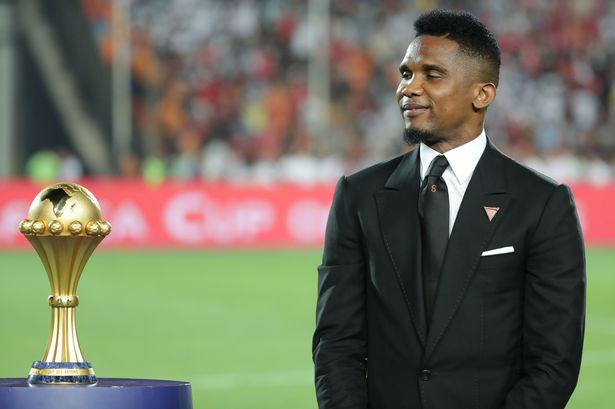
The legacy of arguably Cameron’s all-time greatest footballer is on the line

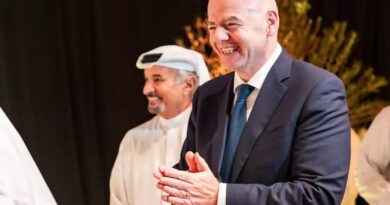
Under two months to the end of his first mandate as FECAFOOT president, Samuel Eto’o’s chronicle isn’t as attractive as his glittering football career that earned him 56 country goals: the highest managed by any player who has donned the Indomitable Lions uniform.
Prior to his arrival at the helm of the federation, there was a general belief that the erstwhile Barcelona man was the new “Messiah” set to salvage what were the remains of Cameroon’s football heritage.
Now, four years down the line, there has been a plummet in national selections across all categories, with their 2026 FIFA World Cup hopes skating on thin ice.
The Indomitable Lionesses equally failed to qualify for the 2025 WAFCON tournament for the first time ever. The country’s junior teams are a carbon copy of the senior selections. Cameroon’s U20 and U17 Lions have unceremoniously failed to impress at the flagship tournaments of the Confederation of African Football (CAF), in successive attempts.
To add to the fluttering on-the-field state, Eto’o is caught between crossroads of alleged: corruption, suspension of key stakeholders and continuous tussle with the Cameroon Government.
Conflict and Controversy
Eto’o’s tenure has been riddled with high-profile controversies that have often overshadowed the day-to-day running of the federation. A notable ongoing tension exists between the FECAFOOT president and Cameroon’s Minister of Sport, a brawl that has repeatedly brought the governance of the national team under intense public scrutiny and administrative conflict, particularly concerning the appointment of coaching staff and management of the national teams.
The former striker has been accused of overstepping his administrative boundaries by attempting to exert an overriding influence on the senior men’s national team, even allegedly controlling training sessions during major tournaments like the AFCON in Côte d’Ivoire, while then Head Coach, Rigobert Song was relegated to a secondary role. These claims suggest a persistent blurring of lines between the roles of the federation president and the technical staff. The federation has faced criticism for frequently changing kit sponsors in quick succession, abandoning established, globally recognized brands for lesser-known, no-name companies like One All Sports and Fourteen. This frequent change has raised questions about the transparency and strategic benefit of these high-value commercial partnerships.
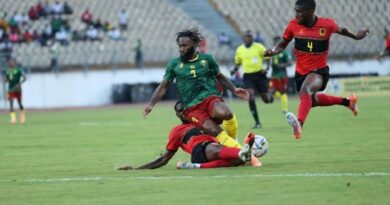
Perhaps the most damaging accusations concern widespread match-fixing scandals rocking the Elite One domestic league. A leaked audio recording allegedly involving Eto’o and the president of a club, Victoria United, appeared to indicate an intent to help the club gain promotion to the Elite One division. These allegations led to the Confederation of African Football (CAF) launching an investigation into Eto’o’s “alleged improper conduct.” Separately, Eto’o’s temper has spilled over into the public domain. During the 2022 World Cup in Qatar, he was filmed having a violent altercation and physically attacking a man on the street outside a stadium, an incident for which he later issued an apology. However, Cameroon’s nil-all draw against Angola on Monday, the FA president was filmed attempting to confront a fan who had called him out as one of the reasons for the Indomitable Lions’ struggles.
Dismantling the Inner Circle and Administrative Instability
The president has overseen the controversial dismissal and resignation of close allies who were part of his winning slate. Henry Njalla Quan Junior, the 4th Vice-President and patron of Njalla Quan Sports Academy (NQSA), was first suspended and subsequently resigned, publicly denouncing the “exécrable gestion” (terrible management) of the federation and accusing Eto’o of match-fixing. Following this, Mbigha Felix Njah, who replaced Njalla Quan as 4th Vice-President, also resigned in September 2025, citing unkept promises and difficulties in exercising his functions. The federation also saw the suspension of other Executive Committee members like Guibai Gatama, accused by stakeholders of being dismissed arbitrarily to silence opposition.
Further symbolizing the alienation of established football institutions under the current regime, the relationship between FECAFOOT under Eto’o and the famed Kadji Sports Academy (KSA), a major talent feeder and a historical entity in Cameroonian football, has been strained. In an extremely late and controversial move, Eto’o’s administration sacked Joseph Ndoko few days to the Women’s Under-17 World Cup, citing “serious accusations of misconduct.” This created chaos and tension in the squad right before a major tournament set to begin on October 17, which saw players protesting the decision.
Compounding the atmosphere of instability has been a high turnover in the position of Secretary General (SG), the federation’s chief administrative officer. Eto’o’s regime began with Benjamin Didier Banlock as Acting SG, who later resigned in May 2022, accusing Eto’o of an autocratic and despotic management style. Banlock was succeeded by Blaise Djounang, who served on an interim basis, before Isaac Noé Mandong was appointed as the new SG. This constant rotation in a key leadership position reflects internal dissent and administrative volatility.
The State of the Indomitable Lions’ Future
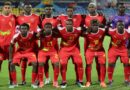
The instability has taken a clear toll on the national teams’ performance and prospects. The Indomitable Lions are almost out of the 2026 World Cup equation,
This failure to secure automatic qualification, compounded by the non-qualification of the Lionesses for the WAFCON and the poor showings of the youth teams, paints a bleak picture for the future of Cameroonian football under Eto’o’s stewardship. His legacy, once untouchable on the pitch, is now decidedly on the line.
Should Samuel Eto’o be re-elected for a second mandate, his focus would need to fundamentally shift from an activist, hands-on control model to one of institutional governance and bridge-building to secure a more successful term.
To achieve this, Eto’o would need to embrace institutional governance and decentralization by drastically reducing the perception of a one-man show, empowering the Executive Committee and the General Secretariat, and respecting the technical boundaries of the coaches. The frequent turnover of the SG and other senior staff must stop, replaced by long-term, stable appointments based on competence. Crucially, the primary roadblock to his mandate—the cloud of corruption and match-fixing allegations—requires him to settle conflicts of interest and transparency issues through full cooperation with the CAF and FIFA investigations, implementing rigorous, visible transparency in all financial dealings, especially concerning sponsorship contracts and the allocation of funds to domestic clubs.
Furthermore, he must actively repair relations with stakeholders, mending the critical relationship with the Ministry of Sport to ensure a harmonious environment for the national teams, and re-engaging with disaffected members of the football community, including former allies and historical institutions like the Kadji Sports Academy. To address the match-fixing scandals, Eto’o must champion domestic football’s integrity by ensuring referees are paid on time (to prevent boycotts), investing in robust referee training and technology, and establishing a truly independent ethics and disciplinary commission. Finally, a successful second term requires him to focus on structural development, not just charisma, by ensuring regular payment of player and staff salaries across all leagues, providing sustainable financial support to women’s and youth teams, and building a long-term technical strategy for the national teams, independent of his personal influence.