Why Infantino’s 10-Year Manifesto Found its Heart in Africa

From the dust of the 2015 FIFA-gate scandal to a $1.2 billion investment across the continent, the FIFA President’s ten-year manifesto to put football back at the center stage has found its most profound resonance in Africa, as Gianni Infantino marks 10-years in office on February 26, 2026.
Ten years ago, when Gianni Infantino stepped onto the stage as a candidate for the FIFA presidency, his manifesto carried a singular, ambitious promise: to return football to the heart of everything the organization touched. For Africa—a continent long rich in talent but starved of structural equity—the skepticism was palpable. Previous eras had offered rhetoric; Infantino promised “concrete actions.”
A decade later, the numbers suggest a tectonic shift. Since 2016, the FIFA Forward program has funneled over $5 billion into global football development—a sevenfold increase compared to the pre-2016 era. But it is in Africa where this new FIFA has most aggressively laid its foundations. Of that global pot, over $1.2 billion has been directed specifically towards the 54 African member associations, transforming the continent from a footnote in FIFA’s balance sheet to the centerpiece of its growth strategy.
Infrastructure has been the hallmark of this decade. In ten years, FIFA has overseen the completion of 203 infrastructure projects across Africa.
The data that tells a story of systematic reconstruction:
- 74 Technical Centers and HQs have been built or renovated to professionalize local administration.
- 99 artificial turf pitches have been installed, ensuring year-round play in regions where climate once dictated the calendar.
- 59 stadiums and stands have been brought up to modern standards.
A flagship symbol of this era arrived in June 2024 with the inauguration of the Juba National Stadium in South Sudan. A $6.9 million investment via FIFA Forward turned a dilapidated site into a 7,000-capacity, CAF-standard venue. For the world’s youngest nation, the stadium represents a monument to national identity, built through FIFA-certified turf, media tribunes, and VIP facilities that allow South Sudan to host the world on its own soil.
A Global Stage for African Talent
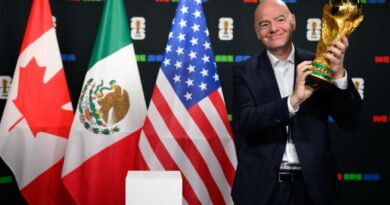
The expansion of competitions has been Infantino’s most debated, yet arguably most impactful, move for the global south. The shift to a 48-team FIFA World Cup in 2026 is a developmental catalyst. By giving more African nations a realistic path to the world stage, FIFA has triggered massive local investment in domestic leagues.
The success of this globalization was evidenced by the new 32-team FIFA Club World Cup. With an average attendance of nearly 40,000 and 2.7 billion content views, the tournament proved that fans crave diversity. On the pitch, the gap is closing: clubs from five continents won matches, and three continents reached the quarter-finals, shattering the old Euro-South American duopoly.
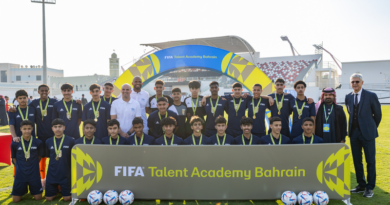
Furthermore, the Talent Development Scheme, led by Arsène Wenger, aims to ensure no diamond remains in the rough. By the end of 2027, 75 FIFA Talent Academies will be established worldwide, ensuring that a child in Dakar or Lilongwe has the same coaching pathway as one in Dusseldorf.
A Revolution in the women’s Game
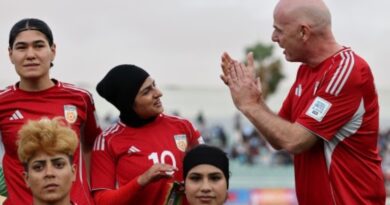
Perhaps the most visible victory of the Infantino decade is the explosion of women’s football. In 2023, the Women’s World Cup distributed $152 million in prize money—ten times the amount seen in 2015.
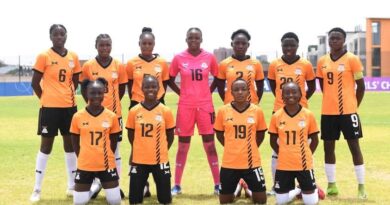
In Africa, this has translated into 51 competition-related projects, ranging from the Women’s Provincial Championship in South Africa to grassroots festivals in Burkina Faso. The governance has shifted too; FIFA now mandates a regulatory framework protecting female players regarding pregnancy and family leave, ensuring that professionalizing the sport does not come at the cost of basic rights.
Governance and the Clearing House
To fund this expansion, Infantino had to first clean the house. The organization moved from being a toxic entity in 2015 to one trusted by the US Department of Justice, which recently awarded $201 million to the FIFA Foundation as compensation for past corruption losses.
This transparency is best seen in the FIFA Clearing House, which has already allocated over $500 million in training rewards. For African clubs—who often see their best talents leave for Europe at a young age—this system ensures they are finally compensated for the solidarity of developing world-class players.
The Road Ahead: Rabat 2025
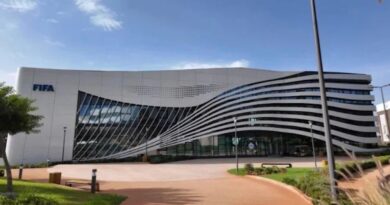
As the decade reaches its climax, FIFA’s commitment to Africa is being physically codified. On July 25, 2025, the Africa Hub in Rabat, Morocco will officially open its doors. Designed to bring FIFA’s expertise closer to the 54 federations it serves, the hub marks the end of remote-control governance from Zurich.
Infantino’s first ten years have been defined by the belief that football cannot be global if it is only prosperous in one corner of the map. By turning the financial taps towards Africa, FIFA has finally started to balance the scales.