How FIFA Forward is Transforming African Football

- FIFA has allocated $1.28 billion to Africa (23.6% of global funding) to reshape the continent’s football landscape
- Under Forward 3.0, member associations can receive up to $8 million per four-year cycle for operations and projects
- Funding is prioritized for functional headquarters, technical centers, and stadiums; currently, 201 infrastructure projects are active across Africa
- Significant projects include the first women’s dedicated technical center in the Central African Republic and the inauguration of the Juba National Stadium in South Sudan
- New $1 billion partnership with the Saudi Fund for Development aims to tackle the ongoing stadium crisis through concessional loans for rehabilitation
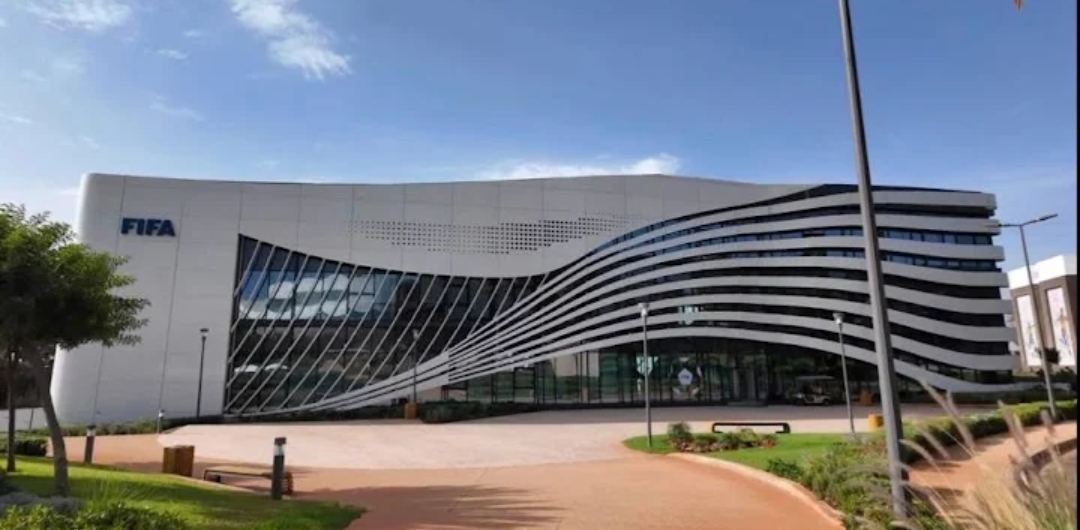
On the sidelines of the Africa Cup of Nations, football’s world governing body, FIFA, invited African media professionals to discuss the growth of the game on the continent. The session was held at the FIFA office in Salé, Morocco.
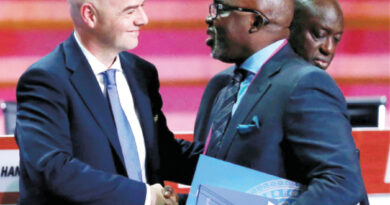
This gathering featured top media professionals, including Lorenz Köhler, Célestine Karoney, Osasu Obayiuwana, Kofi Addae, and Eric Njiru, among others. The meeting took place on Thursday, January 8th, and was chaired by Nadine Achoui-Lesage, FIFA Senior Media Relations Officer.
To provide a comprehensive overview, Solomon Mudege, FIFA’s Head of Development Programs, joined the briefing virtually, while Gelson Fernandes, FIFA Director for Member Associations Africa, was present in person for the occasion.
The Evolution of Global Football Funding
Since its inception in 2016, the FIFA Forward programme has represented a sea change in how global football development is funded and implemented. With a vision to make football truly global, FIFA has invested over $5 billion worldwide.
Central to this mission is the African continent, where an unprecedented $1.28 billion allocation is actively reshaping the landscape of the game. This investment accounts for 23.6% of all global FIFA Forward funding, underscoring FIFA’s unwavering commitment to African member associations. From the inauguration of world-class stadiums to the establishment of the first-ever women’s dedicated technical centers, the results of this decade-long financial commitment are now visible in every corner of the continent.
The evolution of the FIFA Forward programme has seen a steady and strategic increase in financial support to its 211 member associations. A transition from the initial 2016 cycle to the current Forward 3.0 phase, which runs through 2026, reflects a massive scaling of resources. For instance, annual funding for operational costs has risen from $500,000 to $1.25 million, while the budget for specific development projects has grown to $3 million per cycle.
Financial Framework and Operational Support
Under the current framework, each member association is eligible for up to $8 million per four-year period to support their operational needs and development projects. Furthermore, an additional $1.2 million is provided to associations with annual revenues of $4 million or less to ensure that travel and equipment costs never stand in the way of international competition.
FIFA’s development philosophy is built on the principle that a strong national football ecosystem requires a permanent home.
Building the Foundation: Infrastructure and High-Performance Hubs
Every member association is required to possess a functional headquarters, a dedicated technical center, and access to a stadium capable of hosting FIFA World Cup preliminary matches before funds can be diverted to other specialized projects. Across Africa, this policy has spurred 201 distinct infrastructure projects. These include a massive $103.7 million investment in 102 technical centers and medical facilities, as well as $42.5 million dedicated to 52 artificial turf pitches. These technical centers have evolved from simple training grounds into high-performance hubs that incorporate advanced features like hydrotherapy, cryotherapy, and educational spaces to support multiple programmes under one roof.
Regional Success Stories
Specific regional successes highlight the transformative power of these funds. In the Central African Republic, a $3.79 million investment created the first technical center dedicated exclusively to women’s football in the UNIFAC region, combining elite training with social protection for girls. In Madagascar, a $2.12 million renovation modernized the Carion National Technical Center to foster excellence across all age groups. Meanwhile, in Sierra Leone, a $2 million project delivered four new FIFA Quality artificial turf pitches and six floodlight systems. This infrastructure has revolutionized the local game, allowing for extended playing hours and providing a high-quality environment for national teams and grassroots leagues alike.
Addressing the Stadium Crisis and Future Sustainability
Addressing the stadium crisis remains a top priority for FIFA in Africa. As of late 2025, eighteen African member associations still lacked a stadium approved by CAF for international qualifiers. Given that, the vast majority of these venues are owned by public authorities, FIFA has worked to secure long-term usage agreements that allow Forward funds to be used for critical upgrades. A primary example is the Juba National Stadium in South Sudan, which was inaugurated in June 2024 following a $6.9 million investment. This project transformed the venue into a 7,000-capacity facility that meets CAF standards, featuring a certified artificial turf pitch and modern VIP and media zones.
To address the ongoing need for world-class infrastructure, FIFA recently signed a Memorandum of Understanding with the Saudi Fund for Development to allocate up to $1 billion in concessional loans for stadium rehabilitation in developing countries.
By adhering to the FIFA Stadium Guidelines, African nations are building safer, more sustainable environments that protect players and fans. These continuous investments reduce operational risks and ensure that stadiums remain eligible for domestic leagues and major international events, ultimately enhancing the reputation of African football on the global stage.