Repentance At The Grave

Loïc Feudjo’s ordeal is a painful reminder that while football institutions often fail their former stars, poor financial choices and the failure to invest for life after the game can turn fleeting riches into lasting regret.

Justin Farrell, in his book Billionaire Wilderness, writes about the strange paradox of wealth: how abundance often creates the illusion of permanence while masking deep structural fragilities underneath. His broader argument is that money, when detached from foresight and systems of accountability, can become less a source of security than a temporary performance of stability. The same can be applied to modern football, a multi-billion-dollar industry where players across continents sign contracts capable of securing not only their own futures, but the futures of generations to come. With the right discipline, investments, and sound financial guidance, even a career spanning less than a decade can provide lifelong stability. Yet in Cameroon, reality keeps offering reminders that access to wealth is not the same as knowing how to preserve it.
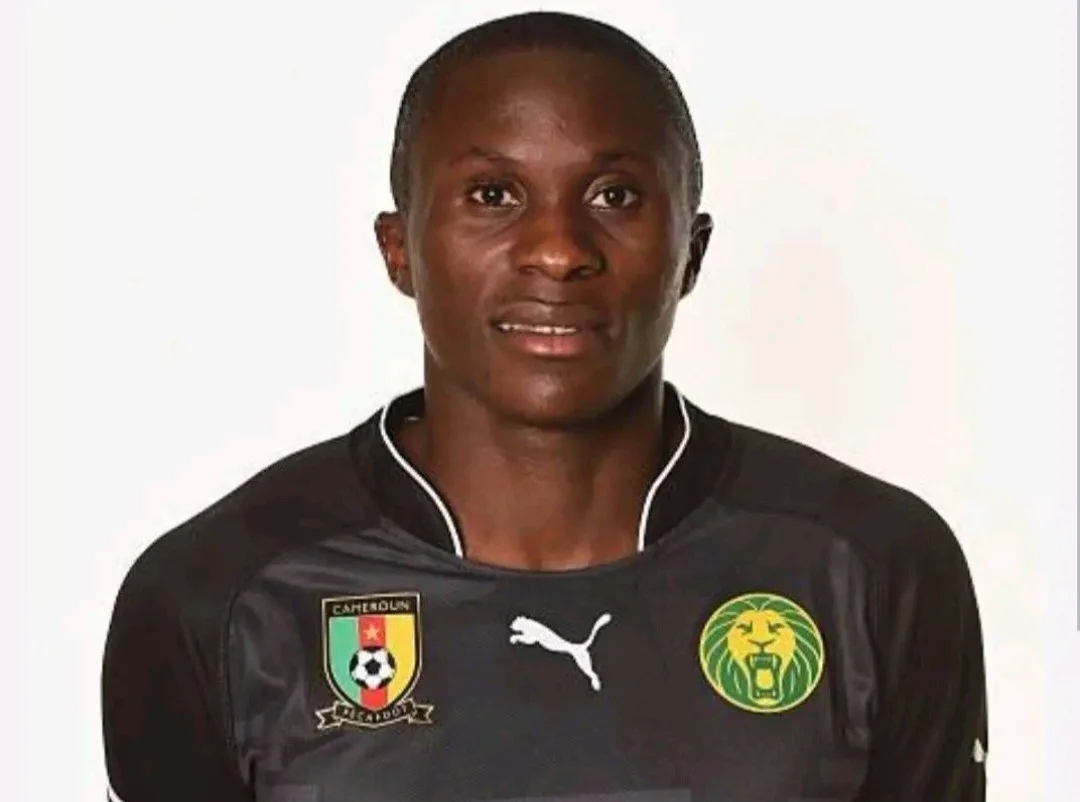
Time and again, former footballers who once wore the green, red, and yellow with immense pride, men who represented their country on the highest stages and earned sums most ordinary citizens can scarcely imagine, later re-emerge in distressing circumstances, making public appeals for assistance and exposing lives that have unravelled far beyond what anyone could have predicted during their playing days. The latest name to join this list is former Cameroon international goalkeeper Loïc Maxime Feudjo, whose plight has become an unsettling reminder of how quickly footballing success can dissolve into uncertainty.
His case is not simply another tragic story of personal financial collapse, nor can it be reduced to an easy narrative of sympathy and institutional blame. It reflects something deeper: the dangerous intersection between systemic neglect and personal irresponsibility. On one hand, it exposes the glaring absence of retirement support systems, financial literacy structures, and meaningful welfare protections for former internationals in Cameroonian football. On the other, it forces a conversation about accountability, foresight, and the failure of some players to recognise that football careers are finite and that financial prosperity without planning is often little more than borrowed time.
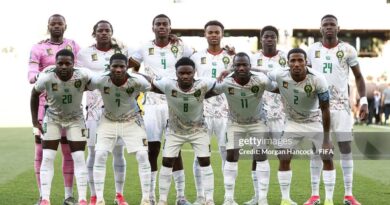
At just 22 years old, Feudjo had already reached a level many footballers spend entire lifetimes chasing. Talented enough to earn a place in Volker Finke’s Cameroon squad for the 2014 FIFA World Cup in Brazil, he travelled as the second backup goalkeeper behind Charles Itandje and Sammy Ndjock, becoming part of football’s grandest spectacle at an age when many players are still trying to establish themselves at club level. For any young Cameroonian footballer, a World Cup call-up is more than an achievement; it is validation, prestige, and often a financial windfall that can alter the course of an entire family’s future.
Although Cameroon endured a disastrous campaign in Brazil, suffering three defeats in three matches against Mexico, Croatia, and hosts Brazil while scoring only once, reports at the time suggested each player received approximately 50 million FCFA in bonuses and participation-related compensation from administrative structures surrounding the national team setup. For global superstars such as Samuel Eto’o, such sums represented little more than another addition to already considerable wealth. For a 22-year-old reserve goalkeeper emerging from Cotonsport of Garoua, however, that was life-changing money. It was the kind of financial opportunity capable of creating businesses, securing family futures, acquiring property, or laying the groundwork for sustainable investments that would continue yielding returns long after the final whistle of a playing career.
But football has a way of distorting reality, particularly for young men suddenly thrust into environments where money arrives faster than maturity can keep pace. Sudden wealth often introduces pressures and temptations that few are adequately prepared to navigate. It creates a dangerous illusion, convincing players that the money will always keep coming, that the contracts will continue to grow, and that the lifestyle surrounding football is somehow immune to the eventual decline every athlete must face. Across much of African football, these financial windfalls arrive without the educational structures necessary to preserve them. There are little or no mandatory wealth management seminars, no structured retirement transition programs, no formal financial literacy courses, no pension systems, and no comprehensive welfare frameworks designed to help players prepare for life after football.
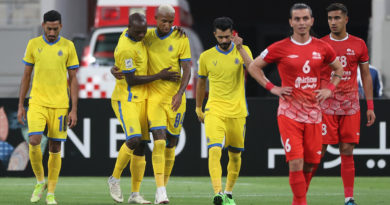
Feudjo’s post-Brazil career appeared, at least externally, to reinforce the illusion that prosperity would continue uninterrupted. He secured a move from Cotonsport to Sudanese giants Al-Hilal, one of Africa’s most financially stable and prestigious clubs, in what his former agent Amadou Tigana Fontem described as one of the most significant transfers negotiated at the time. Reports suggested he earned more than 7 million FCFA monthly, excluding substantial signing-on fees. Later came another lucrative move to Saudi Arabia with Al-Orobah, further strengthening what should have been a financially secure trajectory.
By every reasonable measure, these were contracts capable of securing his future. They represented enough to invest prudently, enough to build enduring assets, and enough to prepare for football’s inevitable end. However, this is where personal responsibility enters the conversation. Too often, football wealth opens doors not to security but to excess. Luxury cars become status symbols. Lavish trips become public declarations of success. Designer wardrobes, expensive nightlife, and endless displays of affluence become substitutes for long-term planning. Many players begin living as though football income is permanent, forgetting that athletic careers are among the shortest and most fragile professions in existence. Eventually, that illusion collapses. And when it does, it often collapses brutally.
It was sometime in early May when I came across a video circulating on Facebook. A visibly broken man was appealing publicly for help, his swollen features and exhausted expression speaking volumes before he even uttered a word. Then came the introduction: former Cameroon international goalkeeper Loïc Feudjo.
My jaws dropped. This was the same young man once present on football’s biggest stage, the same player who had shared dressing rooms with some of Cameroon’s most celebrated names. But here he was, reduced to a public plea for survival.
Feudjo explained that his difficulties began during his spell with Zambian side NAPSA Stars in 2022, when a knee injury disrupted what should have been another chapter in his professional career. “When I arrived, I was unlucky and injured my knee. My contract expired as I was preparing to return to Cameroon,” he explained. As per his own account, he was persuaded to remain in Zambia after being assured another club was interested in signing him. That deal never materialised. “A month later they refused to sign me because they believed I was still injured. My passport expired, and that is when my ordeal began. Now i do not have where to sleep. Even feeding has become difficult,” he cried out.
There is a particular kind of courage, or perhaps desperation, required for a man who once knew affluence to publicly utter those words. Pride is often the last thing to collapse. For Feudjo, necessity appears to have silenced it.
What made his case especially troubling is the silence that surrounded it. Neither FECAFOOT nor SYNAFOC issued any official statements regarding his situation. No emergency intervention was publicly announced. No structured welfare response was communicated. Even more striking was the absence of public solidarity from many former teammates and contemporaries who once shared camps, flights, training grounds, and ambitions with him.
Some individual gestures reportedly emerged. Former Indomitable Lions right-back Geremi Njitap facilitated contact with FIFPRO Zambia, leading to temporary assistance of approximately $250. Michael Ngadeu allegedly promised to provide an airline ticket once immigration complications were resolved, while Serge Branco, a former Cameroon international, pledged 200,000 FCFA.
These gestures deserve recognition, but they remain isolated acts of goodwill rather than evidence of a functioning support structure.
And this is precisely what Feudjo’s case says about Cameroonian football: it exposes an ecosystem built to extract value from players during their usefulness while offering little meaningful concern for what happens when the spotlight fades.
The country has no robust retirement support system for former internationals. It has no pension framework worthy of the name, no structured transition programs, no emergency welfare mechanisms capable of responding to cases like this before they descend into public humiliation. Public sympathy has become the last safety net, and that is neither sustainable nor dignified. Still, institutional failure does not erase personal responsibility.
This is the difficult truth many would rather avoid confronting. At some point, every footballer must accept that the game ends. Retirement arrives, often sooner than expected.
Cameroon has already seen too many cautionary examples of former stars whose later years became defined by hardship, illness, and prolonged uncertainty, painful reminders that football glory often proves alarmingly temporary when unsupported by long-term planning or institutional protection. The late, great Stephen Tataw, captain of the Italia ’90 generation and one of the most revered figures in the nation’s football history, spent his final years battling illness amid growing public concern over the conditions in which he was living before his death in 2020. Louis-Paul M’Fédé, one of Cameroon’s most gifted midfielders and a pillar of that golden era, also passed away following serious health complications, his death reopening conversations about the nation’s treatment of those who once carried its footballing ambitions with distinction. Benjamin Massing, remembered both for his fearsome defensive presence, died in a self-contained, plank built house. More recently, the passing of Emmanuel Kundé once again forced the football community to confront realities about neglect, welfare, and the speed with which national adoration fades once careers end.
While it would be inaccurate and unfair to reduce each of these deaths solely to poverty or financial distress, the larger pattern remains impossible to ignore: too many former Indomitable Lions have endured hardship, dependence, illness, or public uncertainty after retirement, exposing a football ecosystem that too often remembers its heroes only when tragedy forces remembrance upon it. These stories should have become lessons for younger generations, cautionary tales that should inspire both institutional reform and personal financial prudence, but somehow the cycle persists.
Part of the explanation lies in football culture itself. There is pressure among players to perform wealth rather than preserve it. Footballers are expected to look rich, drive expensive cars, dress extravagantly, and embody visible proof that football pays.
Feudjo’s tragedy also revives longstanding questions about the murkier aspects of Cameroonian football, including recurring allegations of corruption around national team opportunities. André Onana has previously alluded to questionable practices surrounding selections. If even fragments of these allegations hold truth, then some players may begin their international journeys already financially compromised.
Yet even setting all such questions aside, Loic Feudjo earned enough during his club career to avoid his present reality. It is not simply about one fallen goalkeeper. It is about a cycle that continues repeating itself because neither side has shown sufficient willingness to break it.
Perhaps this moment can become a turning point. FECAFOOT, SYNAFOC, and the Ministry of Sports must finally confront the urgent need for structured retirement planning, mandatory financial literacy programs, and comprehensive welfare mechanisms for former internationals. At the same time, young players must understand that football wealth is not endless.