Written Into Law, Left Off the Field: Cameroon’s Para-Athletes and the Cost of Inclusion

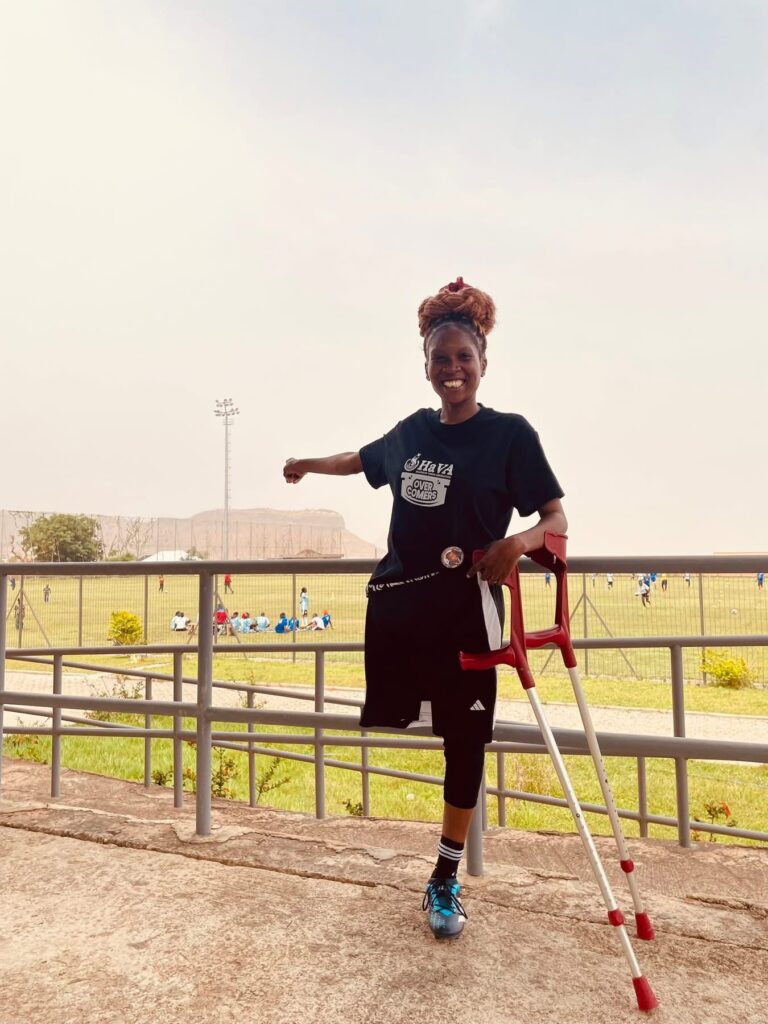
In Cameroon, inclusion exists in two different worlds. In one, it is written into law, articulated through government decrees and framed as a right for people living with disabilities. In the other, it is experienced through broken pathways, inaccessible facilities, bureaucratic delays and the daily struggle to make institutions honour what legislation already guarantees. Nerolel RoselinePrudence has lived in both worlds. Her story is not simply that of an athlete who overcame disability to return to sport; it is the story of someone who entered sport and discovered that the hardest competition was often taking place away from the field.
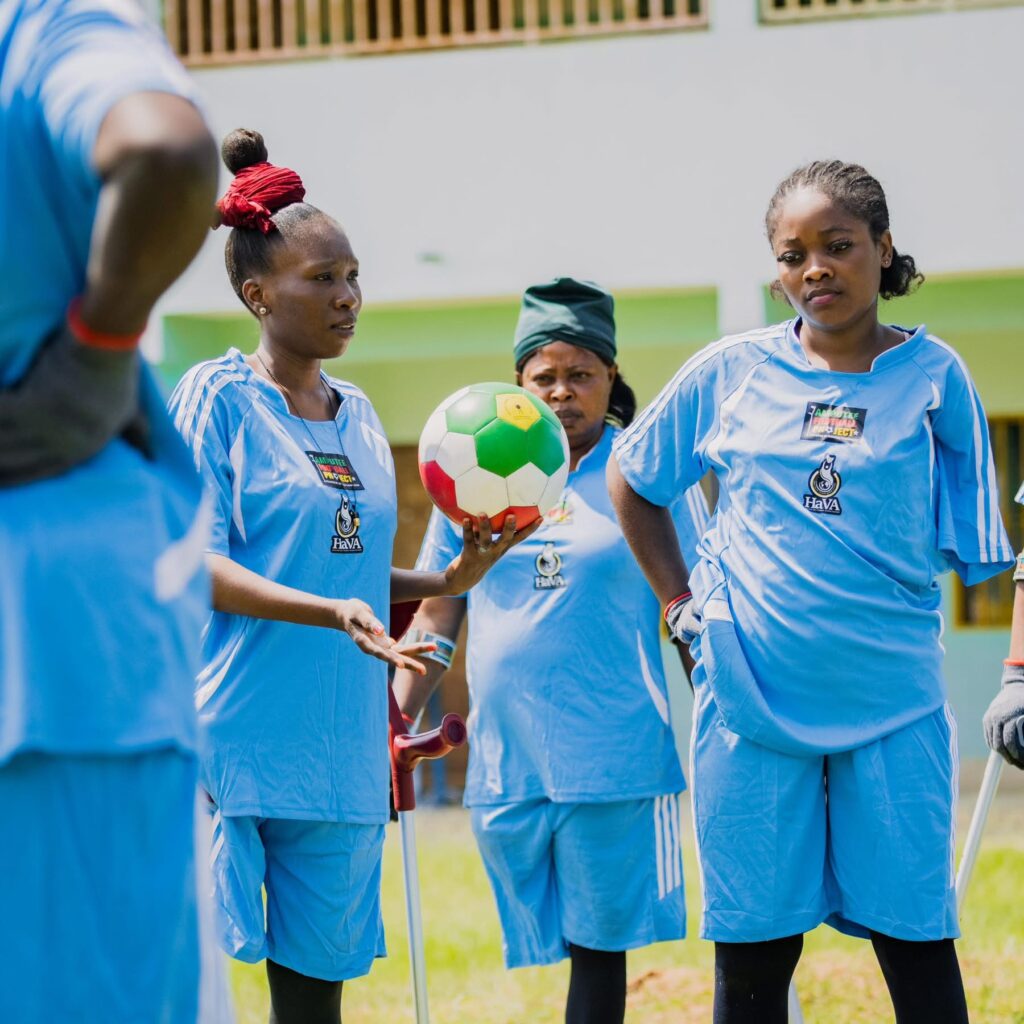
Prudence began playing football at 24, 13years after an accident resulted in the amputation of her leg. For many people, such a situation might be the end of an athletic life. For Prudence, it was the beginning of another one. She joined sports, and began bringing other athletes with disabilities together and became involved in efforts to introduce amputee football in Cameroon. Her work has since taken her beyond the role of player. She is now president of Handicap Vision, vice president of Cameroon Amputee Football and national coordinator of parateqball. Along the way, she has become an organiser and advocate, pushing institutions to recognise that people with disabilities should not have to ask for permission to participate in a society where their rights are already protected by law.
«“The laws are available,” Prudence says. “The problem is how well they are implemented.”»
A Law That Took Eight Years to Reach the Ground
Cameroon’s modern legal framework for the protection of people with disabilities dates back to April 13, 2010, when the country adopted its first major law specifically addressing the rights and protection of persons with disabilities. The legislation was an important milestone, establishing a legal foundation for access, protection and participation. Yet legislation alone could not change the daily realities faced by disabled Cameroonians. It took another eight years before an implementing decree was signed in 2018, providing the mechanisms through which many of the law’s provisions were expected to become operational. That delay set the tone for one of the central problems surrounding disability policy in Cameroon: the distance between what the state has formally recognised and what people experience in practice.
The framework has continued to evolve. On September 1, 2026, the ministers of Social Affairs, Finance, and Employment and Vocational Training signed a joint ministerial order providing a 50% reduction in fees at public vocational and higher-education training centres for eligible people with disabilities. The measure applies to holders of a valid National Disability Card who are registered in the national file of persons with disabilities, meet the required 50% incapacity threshold and have been regularly admitted to the institution. It is a significant example of a disability policy moving from principle to a concrete benefit. At the same time, it illustrates the limits of progress: the measure specifically concerns education and vocational training costs, while other rights contained in the 2018 decree including provisions relating to access to sport still depend heavily on implementation.
For Prudence, that implementation gap is not an abstract policy debate. She has seen how legal rights can become conditional in practice. “In some schools, administrators know these laws exist but still refuse to admit disabled students,” she says. “Sometimes social welfare needs to intervene before they’re admitted.” Reports from organisations including Cameroon Baptist Convention Health Services and Medbox have similarly documented cases in which children with disabilities have been denied access to education, with ignorance of the law, inadequate infrastructure and social stigma among the factors cited. Field studies, including work conducted in the West Region, have recorded children losing entire school years after being rejected by educational institutions. Even where authorities eventually intervene, schools often point to the absence of ramps, accessible classrooms, Braille materials and trained special-education teachers. The result is a system where a legal right can exist on paper while access to it remains dependent on whether an administrator understands, accepts or chooses to enforce that right.
That contradiction becomes even more striking when it reaches sport. Article 24 of the 2018 implementing decree places clear responsibilities on the state and local authorities to make sports facilities and stadiums accessible to people with disabilities. It also provides for financial, material and logistical support for disability sports associations and calls for reduced entry tariffs for persons with disabilities at sporting events. Article 25 goes further, requiring public sports training centres to establish specialised branches for disabled athletes and to provide dedicated physical education programmes. The language is difficult to misunderstand: Cameroon’s legal framework does not merely acknowledge the existence of para-athletes; it recognises their right to participate. In theory, someone like Prudence should be able to approach a stadium or training facility knowing that the system has been designed to accommodate her. In reality, accessibility can still become another obstacle before an athlete has even begun training.
When Inclusion Comes With a Price
The financial challenges of para-sport reveal another layer of the problem. Cameroon’s National Paralympic Committee has played an important role in developing and coordinating disability sport, but the resources available to meet the needs of athletes and organisations remain limited. Prudence acknowledges the role government plays, but believes the support falls short of what is required to turn legislation into functioning programmes. “The government plays its role, but it is not good enough,” she says. “They need to ensure that written laws are actually implemented.” For athletes, the issue is not simply whether funding exists somewhere within the public system. It is whether that funding can reach them in time, in sufficient amounts and without an administrative maze that consumes the energy and resources of already underfunded organisations.
The process can become a cycle of referrals. Regional officials may say there is no money available and direct an organisation towards the relevant ministry. The ministry then becomes the next stage in a lengthy administrative process, before responsibility can eventually move towards the National Paralympic Committee. By that point, the committee itself may not have sufficient resources to support every project or organisation seeking assistance. What should be a straightforward chain of public support can therefore become a bureaucratic loop, leaving disability organisations to shoulder costs they cannot easily afford. Prudence describes the contradiction bluntly: “The National Paralympic Committee does not always have enough for every project. Infrastructure which is supposed to be free we get to pay a huge sum of money. We hope inclusion will really mean inclusion.”
For a para-athlete, those costs extend well beyond the price of entering a stadium. Training requires transport, equipment, appropriate facilities and nutrition. Competition requires travel and preparation. Adaptive sport can demand specialised equipment that is often more expensive or difficult to access than standard sporting gear. When an athlete is already operating without reliable financial support, every additional cost becomes a potential barrier to participation. A right to sport means little if the person who holds that right cannot afford to reach the training ground.
Changing the System, Not Just the Rules
Prudence believes the answer cannot be limited to another policy document. The deeper challenge is changing the way disability and adaptive sport are understood inside Cameroon’s sporting institutions. Her first proposal is action-oriented sensitisation: targeted programmes for players, coaches and sports administrators that move beyond awareness campaigns and address the practical realities of inclusion. Coaches need to understand adaptive training methods. Administrators need to understand their responsibilities under the law. Sporting institutions need clear expectations around accessibility and inclusion. Most importantly, athletes with disabilities should not simply be invited into these conversations as beneficiaries. Their experience should help shape them, positioning them as professionals, educators and co-facilitators rather than objects of sympathy.
Her second priority is economic empowerment. Prudence argues that the financial insecurity surrounding many para-athletes is not separate from sporting performance; it is one of the factors that determines whether performance is possible in the first place. “When you are hungry, you can’t play,” she says. The statement is simple, but it points to a wider problem. An athlete cannot prepare adequately for elite competition without sufficient nutrition, equipment, transport and recovery. Depending exclusively on irregular government assistance or sporadic charity can leave athletes trapped in survival mode, making long-term development almost impossible. Prudence therefore sees entrepreneurship training as part of the solution, giving athletes additional economic tools to finance their sporting ambitions while also preparing them for life after competition. The goal is not to replace public responsibility with individual hustle, but to give athletes greater control over their own livelihoods while the institutions responsible for inclusion are held accountable.
From Athlete to Advocate
Prudence’s own journey illustrates how the failure of systems can turn athletes into activists. She entered sport as someone who wanted to play; she has become someone determined to make it easier for others to play. Her leadership roles have given her a platform to challenge the structures surrounding para-sport, but they have also changed the purpose of her work. The ambition is no longer measured only by personal achievement or medals. It is measured by whether more people living with disabilities can find a place in sport, education and public life without having to fight every institution they encounter.
That may ultimately be the real test of Cameroon’s disability legislation. The country has already written important rights into law. The 2010 legislation, the 2018 implementing decree and more recent measures demonstrate that the legal architecture for inclusion exists and continues to develop. The unresolved question is whether those protections can be translated into ordinary experiences: a child being admitted to school without having to rely on an intervention from social welfare officials; an athlete entering a stadium without confronting an architectural barrier; a disability sports organisation accessing public support without being passed from one office to another; an athlete being able to train, eat properly and compete without wondering where the next source of funding will come from.
For Prudence, inclusion will only become real when the law no longer has to be invoked as an argument for basic access. The ultimate measure will be a Cameroon in which people with disabilities do not have to prove that they belong in the classroom, the training centre, the stadium or the sporting community because those spaces were built with them in mind from the beginning.
Until then, Cameroon’s para-athletes remain caught between two realities: a country that has written inclusion into law, and a country still struggling to make that inclusion something people can actually live.