Petković Seeking to Demolish the Machine He Built

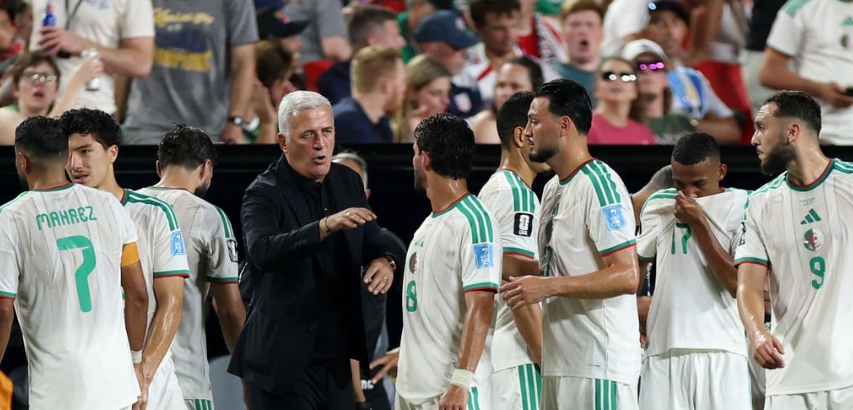
The strangest part of Vladimir Petković’s preparation for Switzerland is not studying their strengths. It is recognising so many of them as his own. Almost five years after leaving the Swiss national team, the Algeria manager returns to face the footballing identity he helped establish.
For Vladimir Petković, this Round of 32 clash is a reunion with the team he spent almost eight years building and the players he helped turn into one of Europe’s dominant sides. To keep Algeria’s World Cup dream alive, he must now eliminate the very team that remains his greatest coaching achievement.
When Petković took charge of Switzerland in 2014, the national team had talent but lacked a clear identity. By the time he departed in 2021, the Swiss had become consistent tournament performers.
During his tenure, Switzerland qualified for every major tournament, reached the Round of 16 at the 2018 FIFA World Cup, advanced to the UEFA Nations League semi-finals in 2019 and produced arguably the greatest result in the country’s football history by eliminating world champions France on their way to the quarter-finals of UEFA Euro 2020.His greatest accomplishment, however, was not measured in results alone.
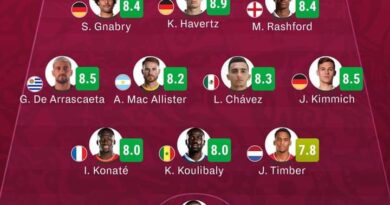
The core of the Swiss side now competing in North America developed under his stewardship. He handed senior international debuts to players who would go on to define modern Swiss football, placing trust in them long before they became established stars.
Manchester City defender Manuel Akanji, Monaco midfielder Denis Zakaria and striker Breel Embolo all began their international journeys under Petković. He also oversaw the development of players such as Nico Elvedi, Rubén Vargas and Remo Freuler, creating a squad built on continuity. No player perhaps embodies Petković’s influence more than captain Granit Xhaka.
Although Xhaka had already established himself internationally before Petković’s arrival, it was during the Bosnian-born coach’s tenure that he evolved into the unquestioned leader and emotional centre of the Swiss national team. Petković repeatedly backed the midfielder during difficult moments and entrusted him with leading a generation that transformed Switzerland’s international standing.
Under current coach Murat Yakin, Switzerland have refined Petković’s blueprint. Their group-stage campaign demonstrated the balance that has made them such difficult opponents. Their 2-1 victory over Canada at BC Place offered a perfect illustration. Veteran winger Rubén Vargas opened the scoring before emerging star Johan Manzambi, one of the tournament’s breakout performers, struck the winner to secure top spot in Group B.
For veterans such as Xhaka and Ricardo Rodríguez, both appearing at their fourth World Cup, seeing Petković in the opposite technical area will feel unusual. For many within the Swiss camp, he was the architect of the team they became.
When he accepted the Algeria job in early 2024, he inherited a talented but inconsistent side still searching for stability after a series of disappointing international campaigns. Since then, he has attempted to blend Algeria’s traditional flair with the tactical discipline that defined his success in Switzerland. The process has not always been smooth.
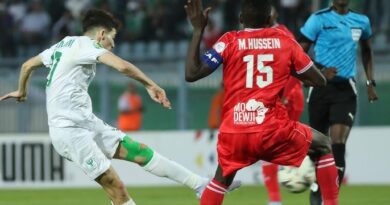
Algeria’s World Cup campaign began with a harsh lesson in reality as they suffered a 3-0 defeat against defending champions Argentina. For many teams, such a result would have shattered confidence. Instead, Petković’s side responded with a crucial victory over Jordan before producing a pulsating 3-3 draw against Austria.
The performance against Austria revealed both the strengths and weaknesses of this Algerian side.
They showed resilience, recovering repeatedly after falling behind, while Riyad Mahrez once again demonstrated his ability to influence major occasions. Yet the match also exposed Algeria’s defensive fragility, an issue Petković himself acknowledged ahead of the Switzerland encounter.
Many of Switzerland’s senior players spent years absorbing Petković’s methods, learning his tactical preferences and understanding how he approaches matches. Murat Yakin, too, recognises the significance of facing a coach whose influence on Swiss football remains profound.
Petković himself has downplayed suggestions that his personal knowledge of Switzerland provides Algeria with a decisive edge.
“The world of football has become universal. Everyone knows each other. There are no real secrets left in the game,” he told reporters ahead of the match. “Just as I know the players, the players know me.”That may be true. But knockout football has never been entirely rational.
Switzerland enter the match as favourites. They have looked more balanced throughout the tournament. Algeria, by contrast, have relied on resilience, attacking quality and an ability to hang on.
Yet football history is full of matches won by teams that understood their opponents just a little better than expected.
This Friday morning in Vancouver, he will spend 90 minutes trying to prove that he still understands his greatest creation better than anyone else.