
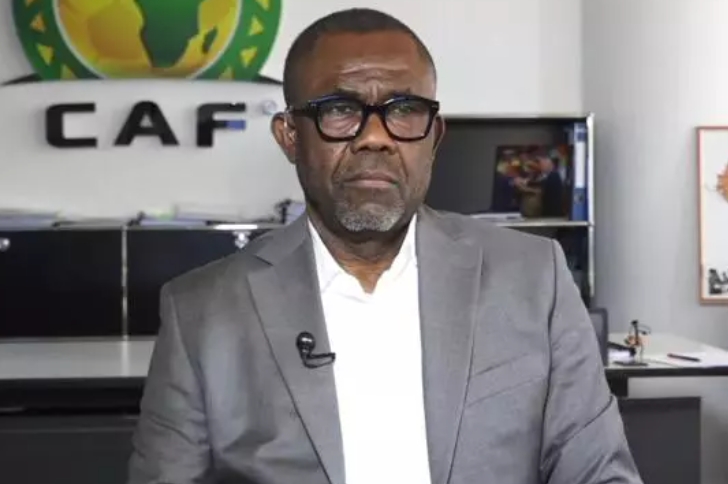
“I Leave on My Own Terms”: Mosengo-Omba Fires Back at Critics after CAF Exit

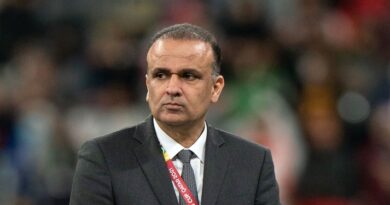
In an exclusive sit-down with France 24, outgoing CAF Secretary General Vérone Mosengo-Omba didn’t hold back, flatly rejecting the narrative that he was forced out in the wake of the recent AFCON final controversy. “Nobody got the better of me,” he insisted. “I’m leaving because I decided it was time to go. I leave on my own terms. “
It’s no secret that CAF has been navigating a storm lately. The governing body found itself under duress after its appeals committee stripped Senegal of the African Nations title won on the pitch, awarding it to Morocco via an administrative ruling. That explosive decision is now sitting with the Court of Arbitration for Sport (CAS) in Lausanne for a final verdict.
Despite accusations that he favored Morocco, Mosengo-Omba remains adamant that his resignation—marking the end of a five-year tenure—isn’t a reaction to the scandal. For him, it’s simply “the end of a cycle.”
However, his departure follows a period where he was arguably the most scrutinized figure in African football. His five years at the helm were marked by a relentless series of political and administrative battles that often overshadowed the sport itself. He found himself at the center of a firestorm following internal audits that alleged financial mismanagement and the payout of unauthorized bonuses within the CAF administration. This atmosphere of suspicion was only heightened by recurring accusations of favoritism, particularly the claim that he allowed the Moroccan Football Federation to exert undue influence over CAF’s hosting decisions and internal politics.
Beyond the financial and political friction, Mosengo-Omba had to navigate a persistent FIFA protectorate narrative. Many critics within the African game viewed him as a plant from Zurich, arguing that he bypassed local interests to serve the global agenda of FIFA. All these were compounded by operational headaches, including the rocky launch of the African Football League and the frequent, disruptive rescheduling of the AFCON dates, which led many member associations to criticize his management style as overly centralized and dangerously “bureaucratic”.
Critics, long suggested that Infantino—a close friend and former university classmate—used Véron to pull the strings at CAF from behind the scenes. Mosengo-Omba’s response was categorical: “Pure fantasy.” He maintains that while the partnership with FIFA is strong, CAF’s sovereignty remained intact under his watch.
The administrative vacuum left by Mosengo-Omba was short-lived, as Samson Adamu now firmly controls the day-to-day operations at CAF as Acting General Secretary. But as one chapter closes in Cairo, another may be opening in the DRC. Mosengo-Omba is already facing a groundswell of support from Congolese supporters desperate for a an overhaul of FECOFA.





Pingback: cialis 20mg pharmacy
Pingback: tadalafil generic
Pingback: omeprazole other names
Pingback: semaglutide effetti collaterali vista
Pingback: xenical price
Pingback: propecia coupon merck
Pingback: ozempic breath
Pingback: doxycycline dose and duration
Pingback: minoxidil for men
Pingback: liraglutide weight loss brand name
Pingback: ketoconazole for fungal infections
Pingback: terbinafine dosage for jock itch
Pingback: ivermectin demodex data
Pingback: ivermectin mechanism explained
Pingback: sildenafil safe sourcing
Pingback: vardenafil moderate dose