The Boy They Said Was Too Fat Is Now Morocco’s World Cup Star

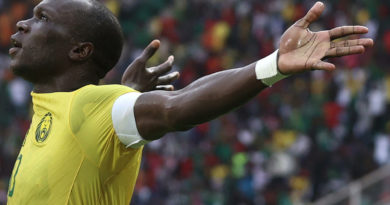
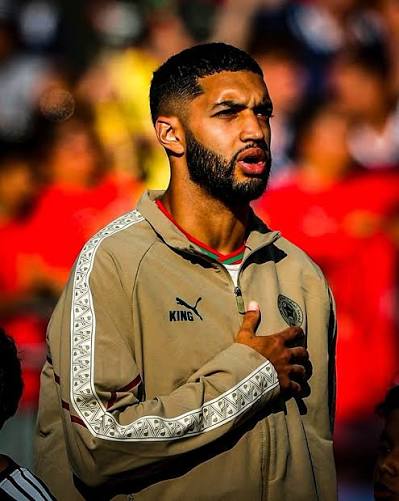
Six months ago, Ismael Saibari’s name was circulating for all the wrong reasons after a bizarre towel incident at the Africa Cup of Nations final. Today, the forward—once discarded by Anderlecht for being overweight—has scored in every World Cup group-stage match and established himself as Morocco’s talisman heading into their round of 32 clash against the Oranje.
Before he became the breakout star of the 2026 FIFA World Cup, Ismael Saibari’s early career witnessed obstacles. As a child, he spent years wearing orthopedic braces to correct inward-turned feet, a condition that threatened to complicate even the simple act of running, let alone the dream of becoming a professional footballer. Those early physical challenges, however, would prove easier to overcome than the rejection that arrived years later.
At the age of 14, with a new season about to begin, Saibari received devastating news from Anderlecht. Belgium’s prestigious club had decided to release him from its academy. According to his own account, the reason given was ‘overweight’. For many young players, such a judgment at a formative age would have marked the end of the road. Instead, it became the defining moment of Saibari’s career.
Encouraged by his family, Saibari transformed disappointment into motivation. He developed the resilience that would eventually become one of his greatest strengths. Years later, he enjoyed a measure of personal redemption when he helped Genk’s youth team secure a championship victory over Anderlecht, the club that had once discarded him. Even then, there was little to suggest that he would one day emerge as the face of Morocco’s World Cup campaign.
The road to that status was anything but straightforward. In fact, when 2026 began, Saibari was making headlines for reasons that had little to do with footballing wit. During Morocco’s Africa Cup of Nations final against Senegal, he found himself at the center of controversy. In the closing stages the encounter, Saibari and teammate Achraf Hakimi were involved in a touchline dispute over a towel intended for Senegal goalkeeper Édouard Mendy.
The incident quickly spread across social media and international broadcasts, threatening to overshadow Saibari’s growing reputation as a footballer. To his credit, the midfielder personally visited Senegal’s team hotel the following morning to apologize directly to Mendy, a gesture that was widely appreciated. More so, as the World Cup approached, his international profile remained defined by a towel dispute rather than his considerable footballing talent. That perception has now been completely transformed.
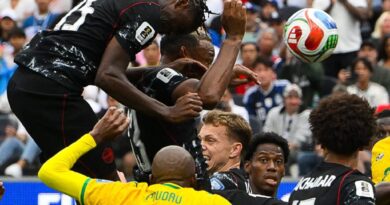
Through Morocco’s unbeaten group-stage campaign, Saibari has emerged as one of the standout performers of the tournament. He scored against Brazil, Scotland and Haiti, becoming one of Africa’s leading scorers at the competition. More importantly, his goals have not come as isolated moments of brilliance but as part of a broader evolution in Morocco’s attacking identity.
Before the tournament began, much of the attention surrounding Morocco’s attack focused on Ayoub El Kaabi. However, it has been Saibari who has become the team’s primary attacking weapon. His performances have given Morocco a fluidity that no opponent have been able to contain so far.
Much of that transformation can be attributed to head coach Mohamed Ouahbi, who understood Saibari’s qualities. Having worked extensively within Morocco’s youth structures, Ouahbi inherited a uniquely versatile player. Saibari possesses the rare ability to influence matches from virtually every area of the pitch. He can dictate tempo from deep midfield positions, break defensive lines through his movement, and arrive in attacking spaces with the instincts of a natural goalscorer.
That tactical flexibility has become Morocco’s greatest strength this summer. Opponents expecting to contain a traditional attacking midfielder, encounter a player capable of occupying multiple positions within the same sequence of play. His physical presence allows him to compete against stronger teams, while his technical quality ensures that he remains effective in tight spaces.
Saibari’s performances have inevitably attracted the attention of Germany’s biggest clubs. He is destined to a €55 million transfer move to Bayern Munich once he gets off the World Cup train.
For Saibari, the clash against the Netherlands is more than a knockout match. It is a meeting with the country that moulded much of his footballing identity. Born in Spain to Moroccan parents and developed within Belgian and Dutch football, he represents a generation of Moroccan internationals whose personal histories are split between multiple nations and cultures.
That dual identity runs throughout the Moroccan squad. Several players were born or raised in the Netherlands before choosing to represent the country of their heritage, creating an emotional complexity: Sofyan Amrabat, Noussair Mazraoui and Anass Salah-Eddine.
Whatever happens against the Netherlands, Saibari’s journey has already become one of those compelling World Cup stories. The teenager once judged too overweight to pursue an elite career now carries the hopes of an entire nation. The player whose year began with ridicule over a towel incident now stands among the tournament’s leading performers. Theit round of 32 encounter will take place at the Monterrey Stadium, in the early hours of Tuesday morning 2:00 AM WAT (West Africa Time).