This Is Not the Bafana You Knew

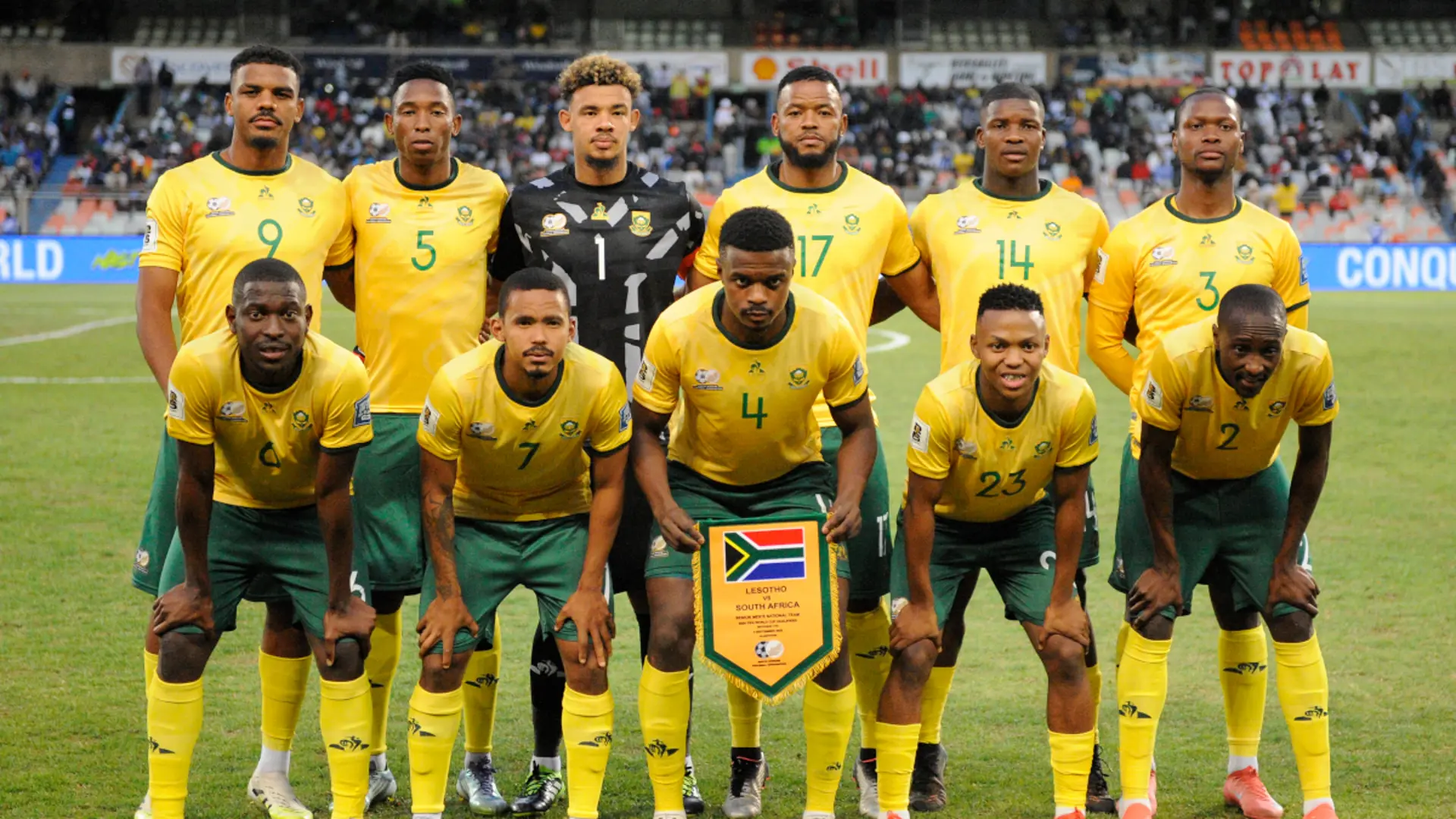
Sixteen years after opening a World Cup against Mexico, South Africa return to face the same opponent carrying a vastly different identity. Gone is the inexperienced host nation that relied on atmosphere and hope in 2010. In its place stands a battle-tested side shaped by Hugo Broos, strengthened by Mamelodi Sundowns’ continental dominance and convinced it belongs among football’s elites.
My ride home on Sunday afternoon should have been uneventful. The late-afternoon traffic crawled along as it usually does in Buea, in Cameroon’s South-West Region. The radio drifted between football talk and advertisements and the driver settled into that familiar rhythm of conversation.
Then I noticed the chauffeur looked unusually cheerful. Not the polite smile of someone enjoying a good day, but the kind of grin that suggests something has gone exactly according to plan. Eventually, curiosity got the better of me. “What happened?” I asked. “A bet,” he replied.
Apparently, he had placed a ticket several weeks earlier. Match after match had fallen his way. There was only one game left standing between him and a sizeable payout: South Africa versus Mexico in the opening match of the 2026 FIFA World Cup. I asked what he had selected, then he responded: “Mexico by two goals or more.” For a moment, I thought he was joking.
His reasoning, though, was wholehearted. Mexico are a traditional World Cup nation. The 2026 tournament marks their 19th FIFA World Cup appearance, extending one of the most consistent records in the global football Jamboree. They are playing on home soil. The crowd will be behind them. South Africa are merely participants, there to enjoy the occasion and perhaps put up a fight before eventually succumbing to the inevitable. It is a view many people share.
The problem is that it is built almost entirely on memory. More specifically, it is built on a version of South Africa that no longer exists.
For many football fans around the world, mention South Africa and the mind immediately drifts back to 2010. The vuvuzelas. The sea of yellow shirts. Siphiwe Tshabalala sprinting towards the corner flag after scoring one of the tournament’s most iconic goals.
Those memories remain powerful because they were once in a lifetime. South Africa became the first African nation to host the FIFA World Cup, and for a few weeks the tournament felt as though it belonged to the continent. For all the spectacle and symbolism, the football team itself was never truly equipped to challenge the strongest sides in its group.
Nostalgia often obscures that reality. South Africa’s campaign began with a draw against Mexico that felt like a victory and ended with elimination in the group stage. The hosts defeated France in their final match, although even that result requires context.
France arrived in South Africa engulfed by an uncharacteristic crises. Nicolas Anelka had been expelled from the squad following a confrontation with coach Raymond Domenech, prompting players to stage a strike in protest. Internal divisions dominated headlines throughout the tournament, and the atmosphere around the team deteriorated rapidly. By the time South Africa faced them, “Les Bleus” appeared fractured beyond repair, a shadow of the side that had reached the World Cup final four years earlier. The victory was memorable, but it did not fundamentally alter the broader assessment of South Africa’s squad.
Beyond the talents of Itumeleng Khune, Steven Pienaar, Teko Modise and Siphiwe Tshabalala, there simply was not enough elite-level quality throughout the team to consistently compete with Mexico and Uruguay. Those nations possessed deeper squads, more players operating in stronger leagues and greater experience navigating the demands of major tournaments.
Even before the World Cup began, the national team had endured years of instability. Coaching uncertainty became a recurring theme in the build-up to the tournament. Carlos Alberto Parreira, initially appointed to oversee preparations, stepped aside in 2008 for personal reasons before Joel Santana took charge. Following a disappointing run of results, Santana was dismissed and Parreira returned less than a year before the World Cup. The constant changes disrupted continuity and left the team scrambling for cohesion during a crucial stage of development.
Compounding matters further, qualification came automatically through hosting rights. Unlike most World Cup participants, Bafana Bafana did not have to go through a demanding qualification campaign capable of exposing weaknesses and sharpening competitive instincts. The nation was preparing for an event, while the football itself was still searching for a stable foundation. Sixteen years later, the landscape looks remarkably different.
The supporters remain familiar. Some of the same fans who painted their faces and blew vuvuzelas in 2010 are still following the team today. The chants remain. Beneath that familiar exterior sits a national team that bears little resemblance to its predecessor. This is not the Bafana you knew. This is a team that arrives at the World Cup because it earned its place. That distinction matters.
South Africa have developed character under Hugo Broos. Over time, they have transformed from an inconsistent side searching for an identity into a competitive national teams. Belgian coach Hugo Broos deserves enormous credit.
When Broos took charge, expectations were modest. South African football had spent years searching for consistency and often finding frustration instead. Slowly, and almost quietly, Broos began assembling a team built on collective belief rather than individual reputation.
The breakthrough arrived at the 2023 Africa Cup of Nations. By the tournament’s conclusion, they had secured a third-place finish and restored pride to a footballing nation that had spent too many years looking backwards rather than forwards.
More importantly, that success was not a one-off achievement. Subsequent performances demonstrated that progress had become a pattern, not by accident. Players understood their roles. Partnerships developed across the pitch. The team became increasingly difficult to break down and capable of troubling stronger opponents.
His greatest disappointment arguably remains the failed qualification campaign for Qatar 2022. Even then, many South African supporters continue to believe their hopes were derailed by the highly controversial penalty awarded to Ghana during the decisive encounter in Accra. Debate surrounding that match persists to this day. Whether justified or not, the episode strengthened the team’s resolve.
The response has been impressive. Even after administrative complications and points deductions threatened to disrupt their latest qualification campaign, South Africa still topped their group and secured a place at the World Cup. The clearest evidence of that transformation can be found in the players themselves.
No discussion of modern South Africa can begin anywhere other than Mamelodi Sundowns. For years, Sundowns have represented the gold standard of African club football. Their sustained excellence domestically and continentally has created an environment where winning is expected rather than hoped for. Players arrive at the national team accustomed to pressure, accustomed to major occasions and accustomed to competing against elite opposition.
That experience matters. Ronwen Williams has developed into one of Africa’s most reliable goalkeepers. Teboho Mokoena dictates games with intelligence and maturity. Khuliso Mudau provides energy, balance and attacking thrust on the right, while Aubrey Modiba offers quality on the left.
These players are not passengers. They are proven performers. Collectively, they form the backbone of a team capable of causing problems for any opponent, including Mexico.
That does not mean South Africa are favourites. Far from it. Mexico remain formidable. Playing at home brings advantages that cannot be ignored. The atmosphere will be intense.
Still, the assumption that Mexico will simply overwhelm South Africa belongs more to memory than reality.
Anyone who watched South Africa’s recent preparation matches might be tempted to underestimate them. Results against Panama, Nicaragua and Jamaica have hardly inspired universal confidence. Preparation matches rarely tell the full story.
International football is littered with examples of teams struggling in friendlies before thriving when the stakes become real. Coaches experiment. Players are rotated. Tactical ideas are tested. What matters is not always the result itself, but what a manager learns from it. Broos understands this. They know the opening match against Mexico will require discipline, concentration and courage. They know opportunities may be limited. They know mistakes will be punished. At the same time, they know they possess qualities previous South African generations could only dream about.
If there remains one concern, it is in attack. There are moments when South Africa create chances but struggle to convert them. Every successful team carries a lingering question mark somewhere, and for Bafana Bafana that question often revolves around the striker position.
Even so, there is reason for optimism. Lyle Foster arrives as a Premier League forward with the ability to stretch defences and exploit space. His pace and directness can unsettle opponents, while his movement creates opportunities for teammates. In reserve, Iqraam Rayners provides another attacking threat, while Evidence Makgopa offers a different profile capable of influencing games in crucial moments.
The goals may not always arrive in floods. There is, nevertheless, enough quality to punish complacency.
Which brings us back to that gentleman and his betting slip. By the time my journey ended, his confidence appeared slightly less certain than before. Not because I convinced him South Africa would definitely beat Mexico. Football is rarely that predictable. Upsets happen. That is why we watch. What I hoped to convince him of was something simpler.
The South Africa preparing to face Mexico in 2026 is not the South Africa that shared the stage with them in 2010.
This group has emerged from difficult qualification campaigns, proven itself on the continental stage and developed around a core forged in one of Africa’s most successful club environments. It is led by a coach who has restored belief, anchored by experienced leaders and driven by a generation that expects to compete rather than merely participate.
Mexico may still prevail. Home advantage remains significant, and tournament football often rewards experience. Should that happen, the explanation will not be that South Africa were overwhelmed by the occasion. It will not be because they lacked quality. And it certainly will not be because they were living off memories.
The rest of the world may still be picturing the Bafana Bafana of 2010. The team arriving in 2026 has moved on. The question is whether everyone else has.